In 2014, I went to Korea for a six-month exchange program, carrying much uncertainty and anxiety with me. I didn't speak a word of Korean, and to many of my friends back home, Korea only meant sports events. As a result, I faced considerable skepticism at the time. Four years have passed, and looking back, I've always felt that despite the many frustrations during my time in Korea, those days taught me the most about my own limits.
During my first week, I had to take a 40-minute bus ride alone to campus to find a Korean teacher who spoke Chinese to help me with my scholarship paperwork. At that time, I only knew basic Korean pronunciation. Armed only with pre-written directions in Korean, I was pushed onto the bus by a Korean person and spent the entire ride staring at the station names they pointed out, constantly comparing them with the signs on the bus, until I finally arrived.

Aware of my shortcomings, whether after class or on weekends, I spent almost all my time in cafes memorizing vocabulary and studying grammar, using the most kindergarten-like methods to memorize everyday Korean phrases.

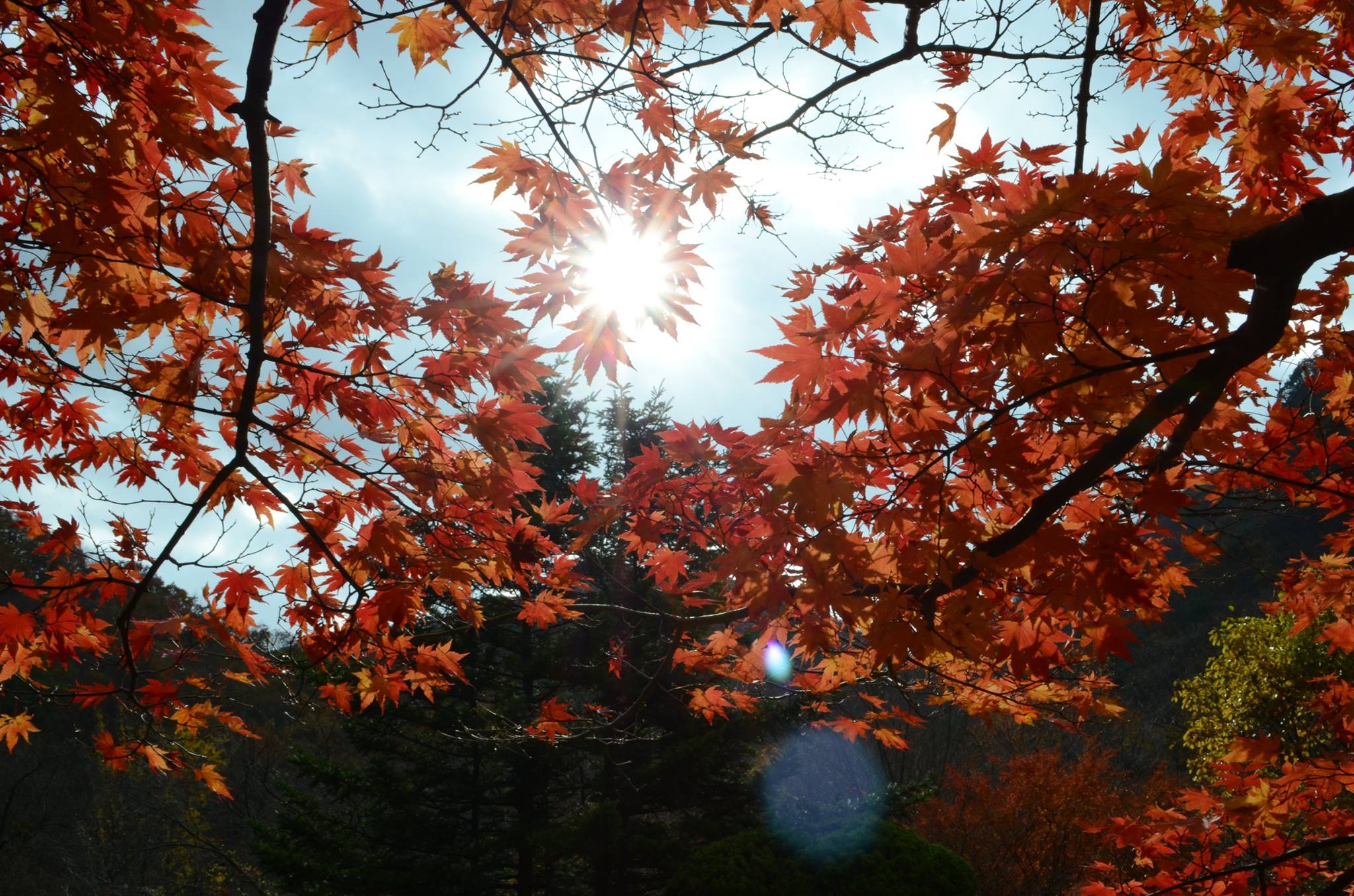
Of course, I also seized every opportunity—taking the bus alone to a national park to photograph autumn leaves, and hiking up mountains for four hours with friends in -2-degree weather.


Over these four years, I've always felt that my days in Korea were my most free, most enriched, and most abundant moment so far. Whenever I recall this period, my eyes still well up. For a while, I kept wondering whether I loved Korea or loved this kind of freedom. Later, I gradually realized that what I loved was not Korea itself—I loved these days of challenging my own limits, loved freely planning my schedule, loved having no one to stop me from doing what I wanted, setting aside all my worries temporarily, living peacefully with myself, and enjoying days where I didn't have to care about others' opinions.
Whether you go abroad to study or work, stepping outside your comfort zone teaches you how capable you really are. When you don't know the way and ask for directions in broken Korean, and even when Koreans can't understand you, advancing to the point where you can shop at a beauty store and Koreans ask with surprise, "You're not Korean?", such affirmation of your own progress brings incomparable joy and happiness. Because I know that my efforts yielded tangible results. No matter how hard or tiring, my spirit was truly fulfilled.

Over these four years, I haven't experienced that kind of "true spiritual freedom and happiness" again. Many people say I can never go back, and indeed I feel I can't go back either. But I believe everyone works so hard to achieve this—a life of spiritual fulfillment and freedom. No matter how long it takes, no matter how much effort is required, enduring this painful period now, and only then, after being thoroughly worn down by life, work, and money, will we finally have clear skies.
That's why "stepping out of your comfort zone" is so important—because if you don't leave, you have no chance to hone yourself; if you don't leave, you have no chance to grow. If you don't leave, you can only maintain the status quo, forever remaining the person you most want to escape from.
Below is my reflection from three years ago, which I'd like to share with everyone.
I wrote this article right after arriving in Busan.
"This is where the Busan airplane takes off, and it could also be where a person's dream journey begins. The arc of the plane's descent traces a new chapter in my life.

I never thought I could really do a six-month exchange abroad. It's probably not the enviable European or English-speaking countries, nor Japan as most people aspire to, and it's certainly not a country that some Taiwanese people get angry mentioning (or they never mention it at all).
Before departure, I faced various doubts and confusion. But I want to say that I never cared about these, nor did they matter to me. Because no matter where you are or what language you speak, as long as you do what you love and what you want to do, even if you have to face countless difficulties and endure various hardships, it will feel worthwhile and fulfilling, and it's a form of growth. The only question is whether you're willing and ready to chase your dreams, regardless of others' opinions.
Let go of yourself, walk into unfamiliar places, step out of your comfort zone, and forge your own path in life. I don't know where I found the courage to walk alone into a country where I didn't speak the language. Throughout the journey, many friends supported, believed in, and encouraged me. And here I've met so many new people. Though only a week had passed, I believed this would become a rich and meaningful life journey."
And so I stumbled through and gained so much before returning from Korea.
More details can be found at: http://blog.yam.com/ierne05032/category/4849880
Emotional transformation is important, so I want to share it with everyone.
Exchange student life seems colorful and full of activities, with frequent outings or seemingly carefree academic life, but beneath the cheerful surface, there are many difficulties to face. These include the hesitation and anxiety when preparing your exchange application—not knowing if your decision is right, wondering if you'll really gain anything, questioning whether delaying graduation is worth it.
After successfully applying, you're overjoyed and can hardly believe you're going abroad. But facing the unknown before departure brings complex emotions—even packing each item into your suitcase fills you with unease.
Upon arriving in Korea, at first because of the language barrier, I could only eat at fast food restaurants, pointing at pictures to order. Combined with all-Korean instruction, I initially couldn't keep up with classes. During language lessons, I had to ask my classmate what the teacher was saying. After class, I'd review the material but often couldn't remember vocabulary or got grammar wrong. I felt really frustrated then, thinking I was putting in so much effort with no reward, and I desperately wanted to leave.
Fortunately, I made many friends from Taiwan and had a wonderful roommate. We studied Korean together, went out and played together. Gradually, I became more accustomed to Korean life. Two months into the exchange, as fireworks bloomed brilliantly in the sky, I suddenly wished I could stay in Korea.

Later, my Korean ability improved somewhat. I could travel alone, shop by myself, and often struck up conversations with Korean people. When shopping, Koreans would often compliment my Korean, saying it was good. Over time, I gained more confidence in my Korean ability and became motivated to learn more, studying beyond the textbooks. I usually supplemented through Korean dramas and songs, which contain more colloquial expressions. Through these, I also came to understand just how powerful Korea's entertainment industry is.
The shift from resistance and frustration to actively learning about Korean culture was a clear change in me. Before going abroad, I knew almost nothing about Korean celebrities or had only watched a few popular dramas. Now I can introduce other people to which major entertainment companies exist in Korea and information about their artists. The biggest surprise was being able to understand Korean dramas without subtitles. Though I don't understand everything, being able to feel my own progress truly moved me.
As I approached returning to Taiwan, the thought that emerged was actually "Do I really have to go back to Taiwan?" Everything felt like a dream. I wasn't clear on whether I wanted to go back, but I was very clear that I had to. My feelings were somewhat resigned, but parting is unavoidable and a major undertaking.
The friends I made in Korea, including people from Taiwan, China, Vietnam, and Korea, as well as my good relationships with teachers—when I thought about parting and not knowing when we'd meet again, or possibly never seeing them again, my eyes couldn't help but turn red. But learning to say goodbye is also an important process. When everything reaches its end, you make a special effort to remember. The last meal together, the last outing, the last karaoke session—all became precious memories. Especially when they said, "We must meet again," there was something unsettling and doubtful about it, but I truly hoped we would. Such emotions can't be fully appreciated in the moment.
After returning to Taiwan, I deeply felt that going abroad is like Mario jumping into a green warp pipe. After collecting abundant coins, you return to the game overflowing with rewards to face various new levels. Except our game is life, and there are no second takes. No matter how many difficulties life presents, we still have to return and face them. The exchange was just one small part of my life, but the exchange experience brought me so much insight, helped me grow, and made me more reflective. If you have the chance to study abroad, you must seize it and make the most of it.
Be clear about why you're going abroad. No matter which country you choose, once you go, you must seize the opportunity and not give up easily. Frustration will definitely come, but once you persevere through those difficulties, you'll become stronger.

Here's the Busan sea that I dearly love.