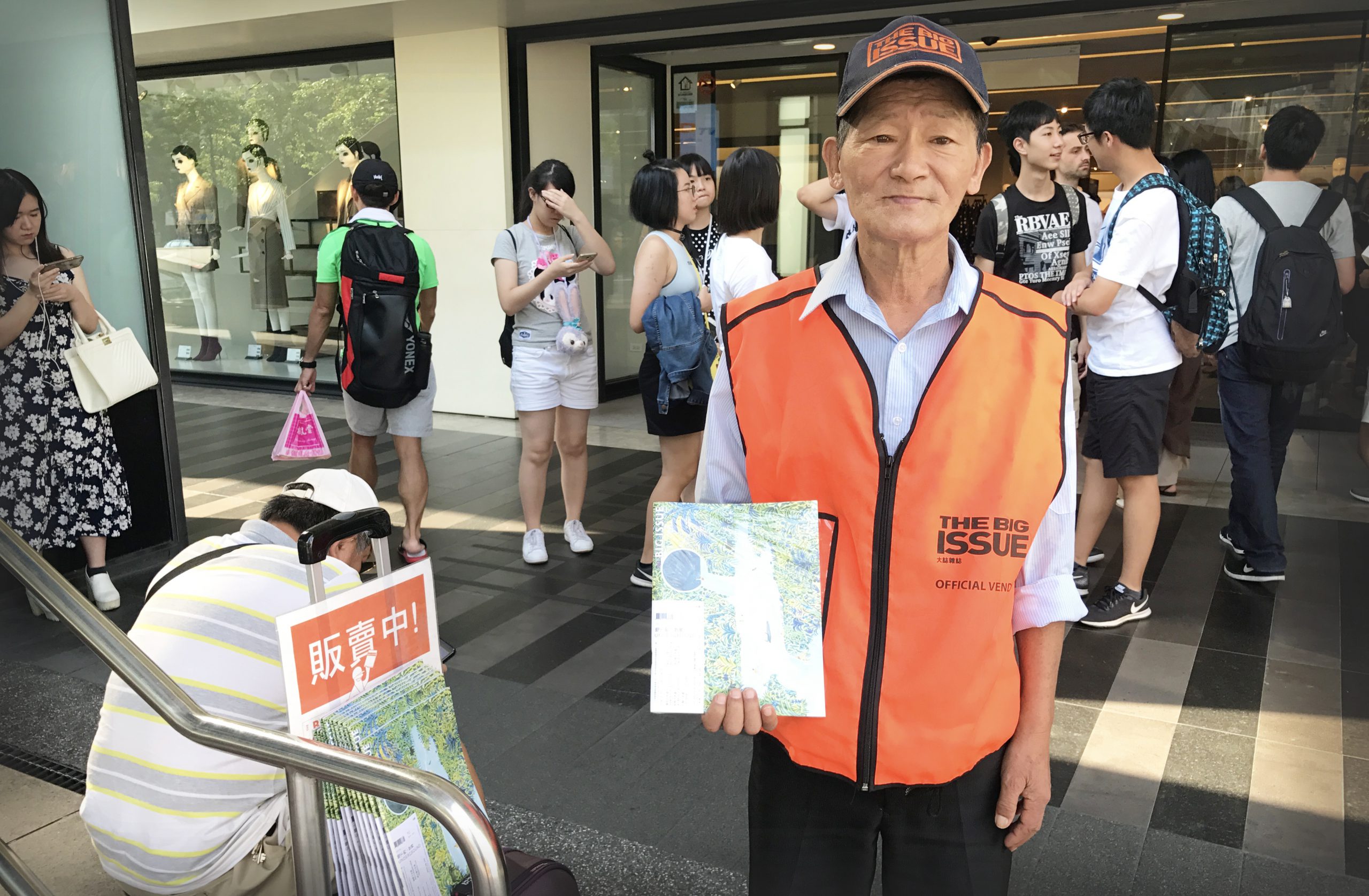
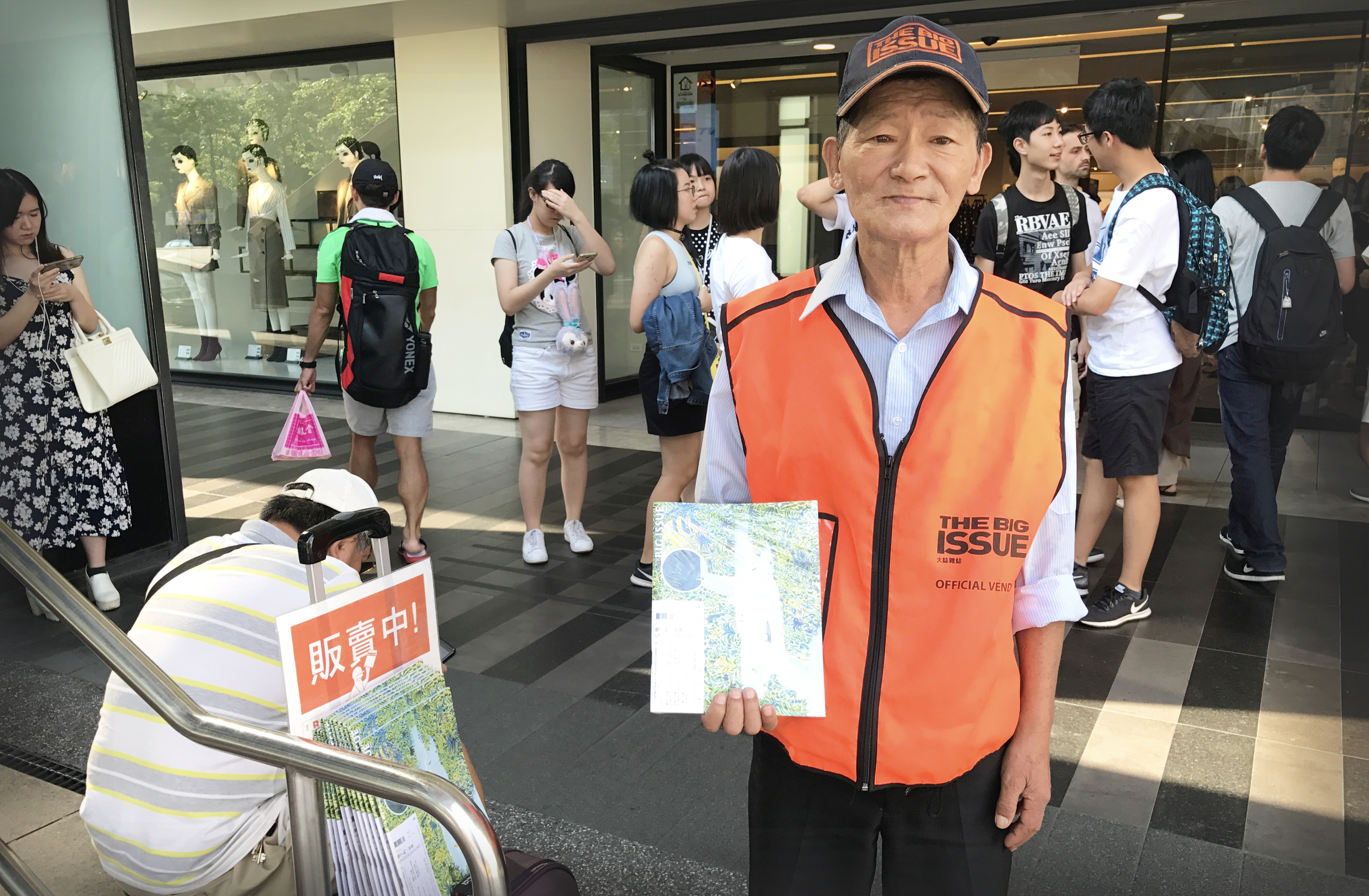
'I don't have much time left,' 66-year-old Uncle Chen Jin-chun says this with a smile, standing at the exit of Zhongxiao Dunnan MRT Station, watching the passing crowds, though few actually stop. For eight years, Uncle has made a living selling The Big Issue magazines. He sells between 10 to 50 copies daily, receiving 50 yuan in return for each sale—a livelihood that's manageable.
'As long as I can survive, that's good enough,' Chen Jin-chun keeps expressing his reflections on life. It's not just because he once lived on the streets, but because he has been undergoing dialysis for over a year. Rolling up his sleeve, Uncle points to the wound from the "fistula" (Note), mentioning he has to go to the hospital 2 to 3 times a week. "I can't set up my stall on those days!" Or, after leaving the hospital at four o'clock, he fills his stomach and then sets up for another 4 hours, selling however many magazines he can.
Note: Most hemodialysis patients rely on an arteriovenous fistula created by cardiovascular surgeons to undergo dialysis.
I noticed Uncle Jin-chun while wandering around Zhongxiao. He was leaning against a pillar outside ZARA, crouching and gazing ahead, seeking some air conditioning in the scorching heat. But then he suddenly grabbed a plastic bag and walked into an alley. Curiosity drove me to follow him. I discovered he went into a convenience store and threw the bag into the trash bin—he didn't want to create a mess, a small warm gesture.
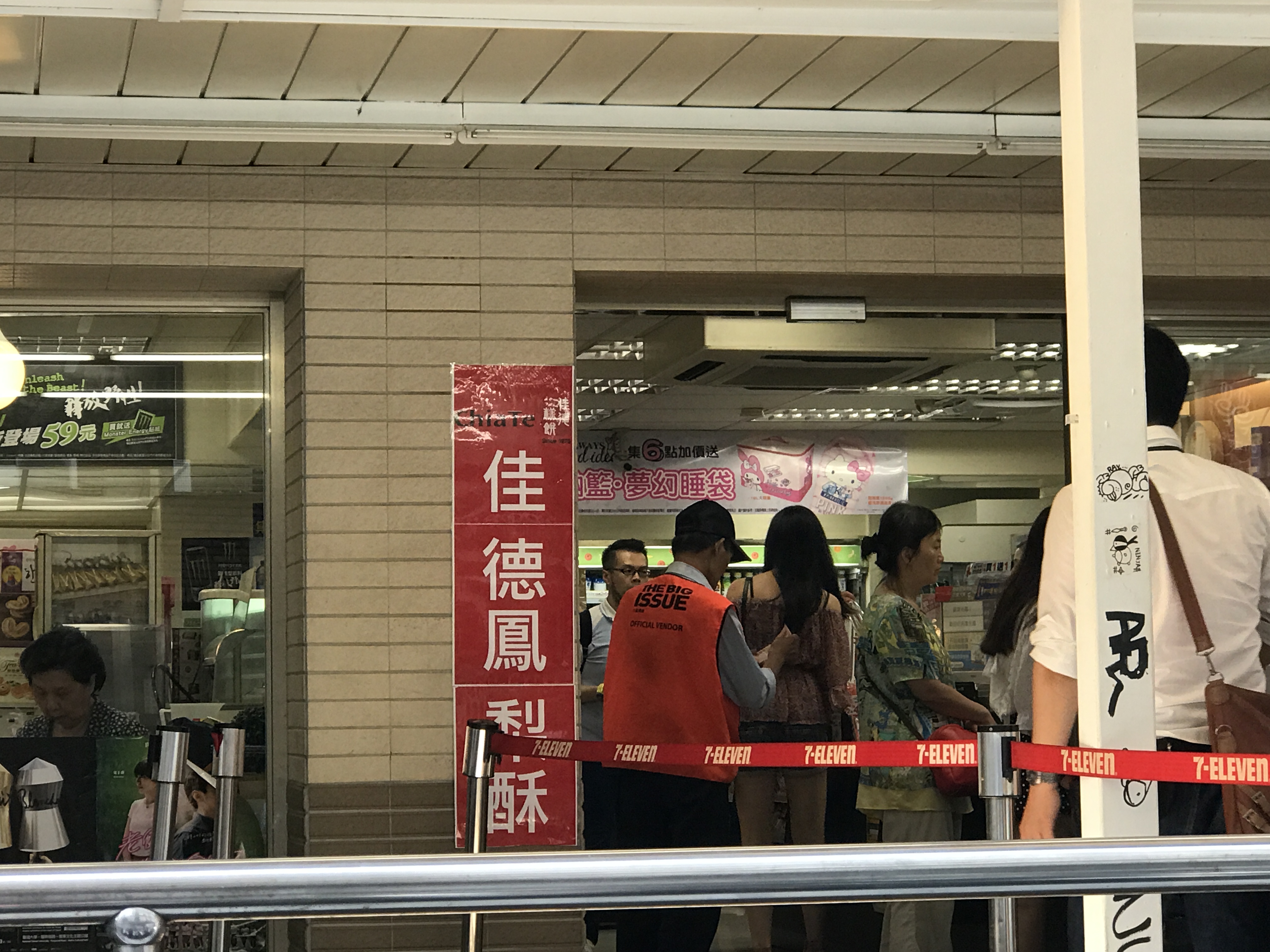
Then he pulled out some bills, counted them hesitantly, and bought a small hot coffee for 25 yuan—the cheapest option in the coffee lineup. With weather this hot, why buy a hot drink? I walked back with him and noticed Uncle didn't drink the coffee right away. Instead, he left it in a cool place. I later learned that an iced coffee costs 35 yuan—ten yuan more. Ten yuan might not seem like much, but for Uncle it's one-fifth of his earnings per magazine. So he chose to let the small hot coffee cool down before drinking it.
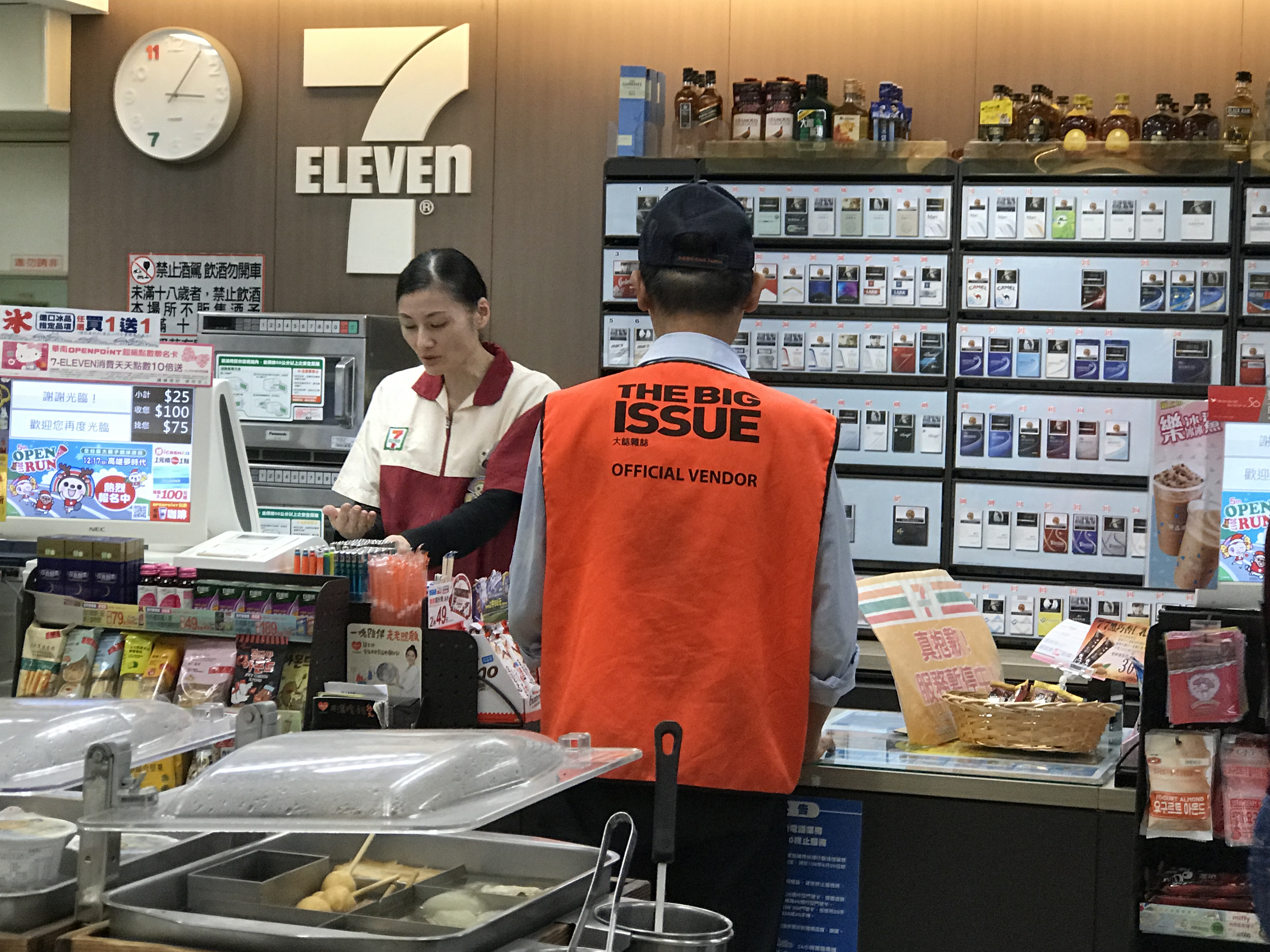
There's actually a story behind Uncle buying coffee. He said that previously, while setting up his stall, he got so tired that he fell asleep leaning against the pillar, and some of his remaining magazines were stolen. After that, he didn't dare be careless, fearing he wouldn't sell them all and would have to bear the inventory cost. So when tired, he buys coffee to stay awake and prevent his hard work from going to waste.
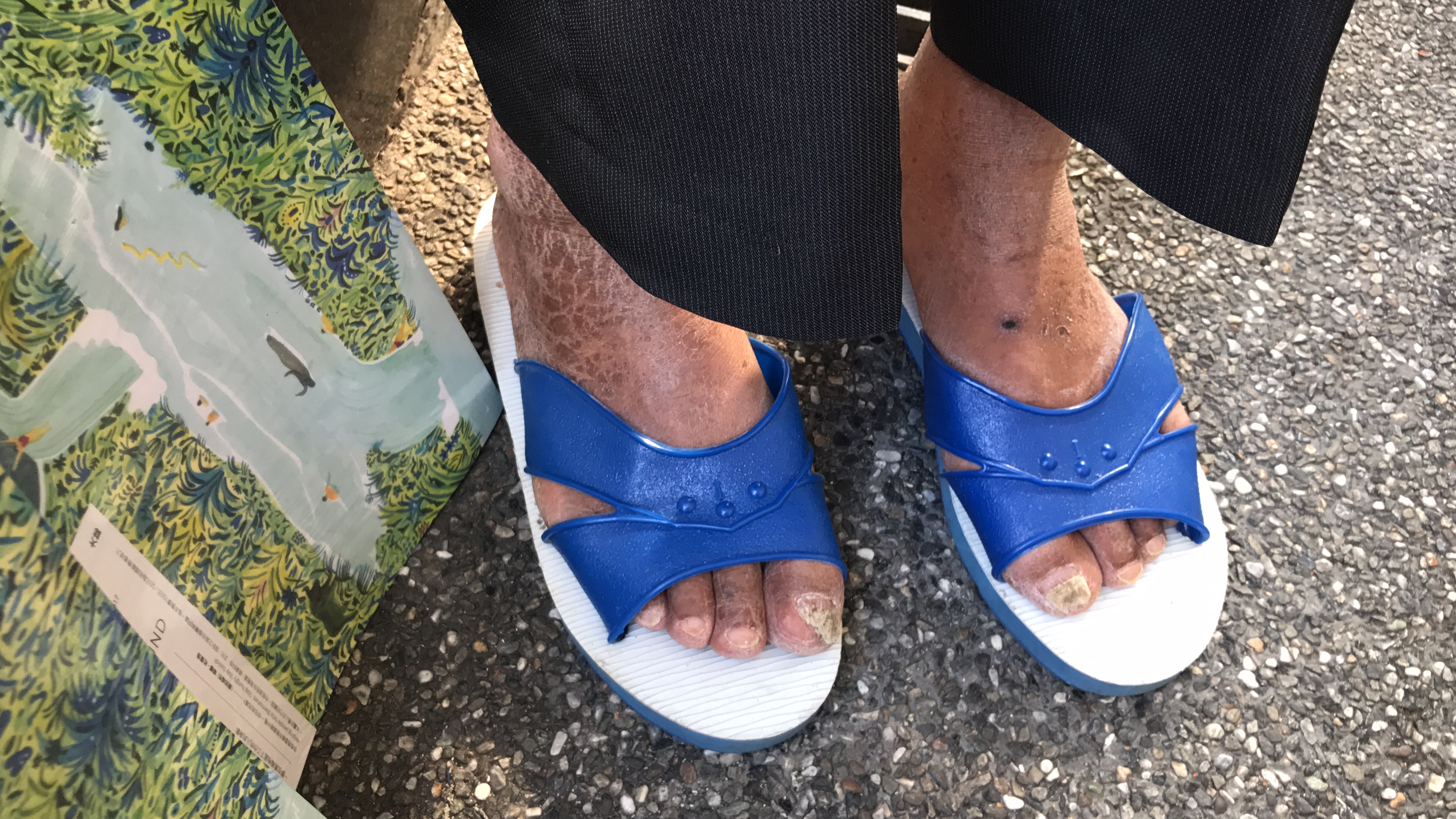
I squatted beside Uncle and listened to his story. I noticed he wore only blue and white flip-flops, his toes and nails already worn and broken. Every day from 11 a.m. to 9 p.m. for eight years—he's maintained this schedule. He eats at nearby food stalls and quickly returns to his post. He used to call out his wares while walking, but now with insufficient strength and unable to carry heavy books, he stays in one spot to sell.
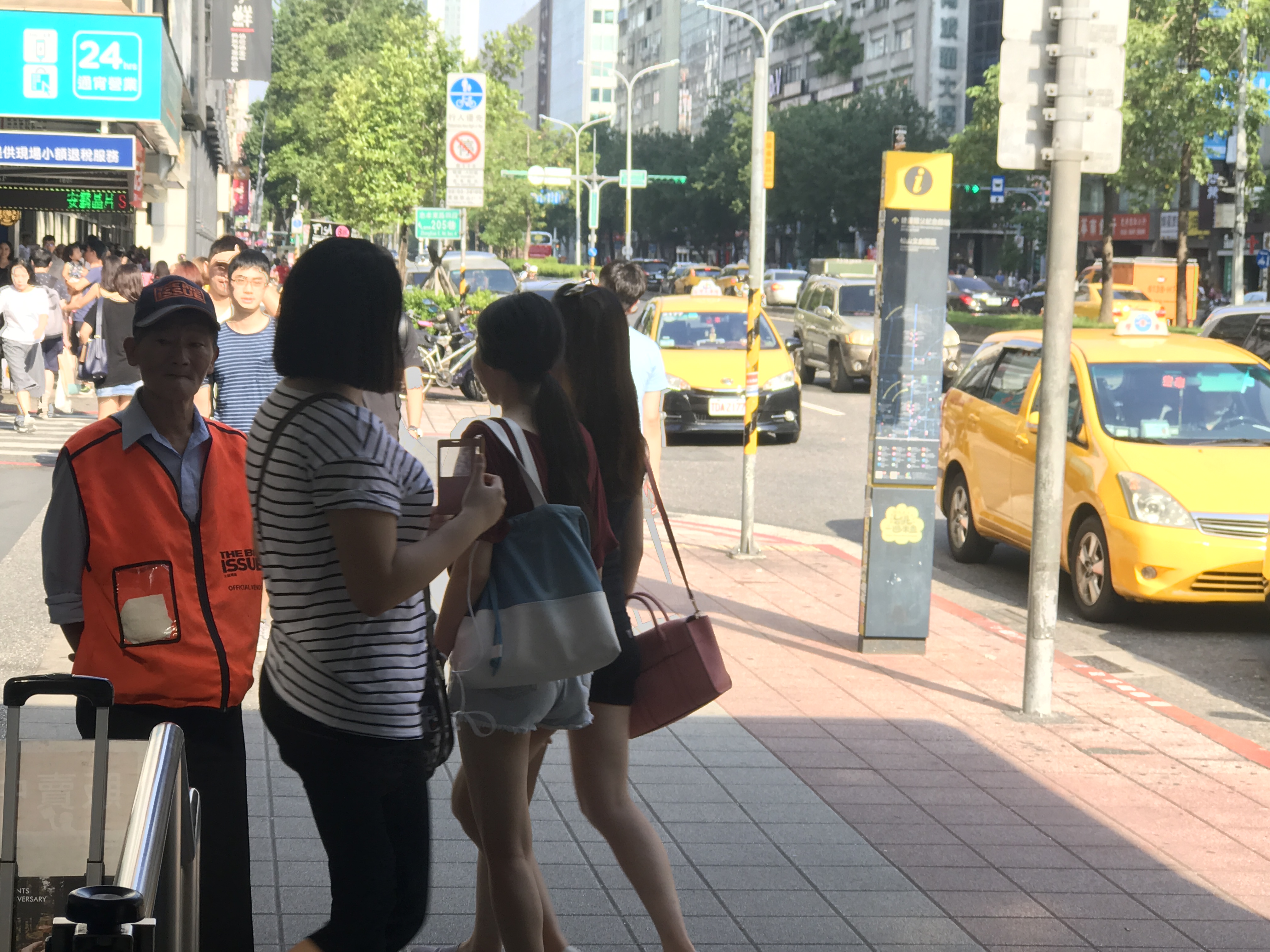
Uncle says that because The Big Issue has such good content, many people buy it. His livelihood is sustainable. "I used to live on the streets!" When he talks about the past, it was sleeping on the street with no fixed location, each day unstable and difficult. It wasn't until a friend introduced him to selling magazines that he had the relatively stable life he has now.
Uncle Jin-chun says he's also introduced other homeless friends to sell magazines together, so everyone can live better. That's why whenever he talks about The Big Issue, he praises it endlessly and actively helps introduce and promote it, because it changed their lives. They can have three square meals, don't have to live on the streets anymore, live in a nursing home with professional care—their lives are much better than before. Though it may look difficult to others, Uncle Jin-chun says, "This is already enough for me."
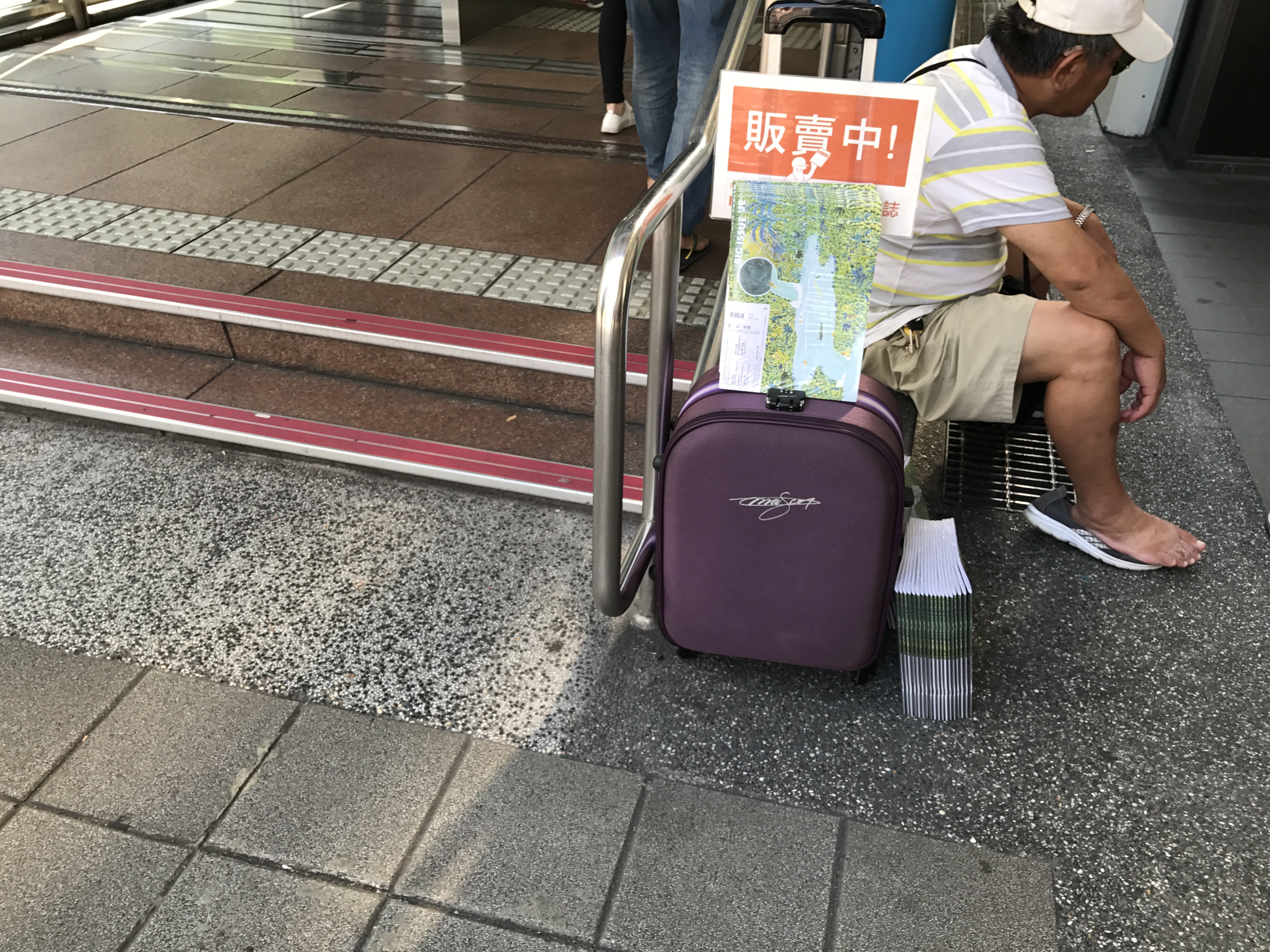
About The Big Issue
The Big Issue
The Big Issue is a magazine founded in London and established in 1991, now with more than twenty years of history. The magazine covers current affairs, social issues, and arts and culture information. It's currently published in different versions in ten countries including the UK, Japan, Australia, and South Korea. What's special is that the distribution channel for this publication is through homeless and socially disadvantaged people as vendors. The organization consists of two parts: one operates as a limited company responsible for producing and distributing magazines to street vendors, and the other exists as a non-profit organization dedicated to helping these vendors solve the issues that caused them to become homeless and regain control of their lives.