"As far as I know, almost no one has gone from being last in high school Division B to becoming a world cup champion."
Competitive cheerleading has become a popular permanent club and school team in many high schools and universities in recent years, and is also the hottest sport on campus. Lai Hong-ting (known as "Baldies") started with the cheerleading club at Yongchun High School and has continued for 12 years now. This year marks the ninth year since I first met him. The day of this interview was also the first time in all these years that we gathered somewhere other than the "blue mat."
"Born to Cheer" is what left the deepest impression of Baldies and was my first impression of him. That morning was an ordinary day for him—he showed up wearing sweatpants and a cheerleading practice uniform, with a T-shirt that read "Vow to Win" in large letters, a resolve etched firmly on his body. All these cheerleading elements have become truly integrated into his life.
"You have to work very hard to make it look effortless," Lai Hong-ting—Monster Black Team, first place in University Division B, five-time consecutive selection to the World Cup Chinese Taipei tumbling team, defeated the American "Dream Team" in 2015 to win the championship, returned triumphantly to Taiwan, and received two National Sports Awards. These seemingly brilliant achievements never came from nowhere.
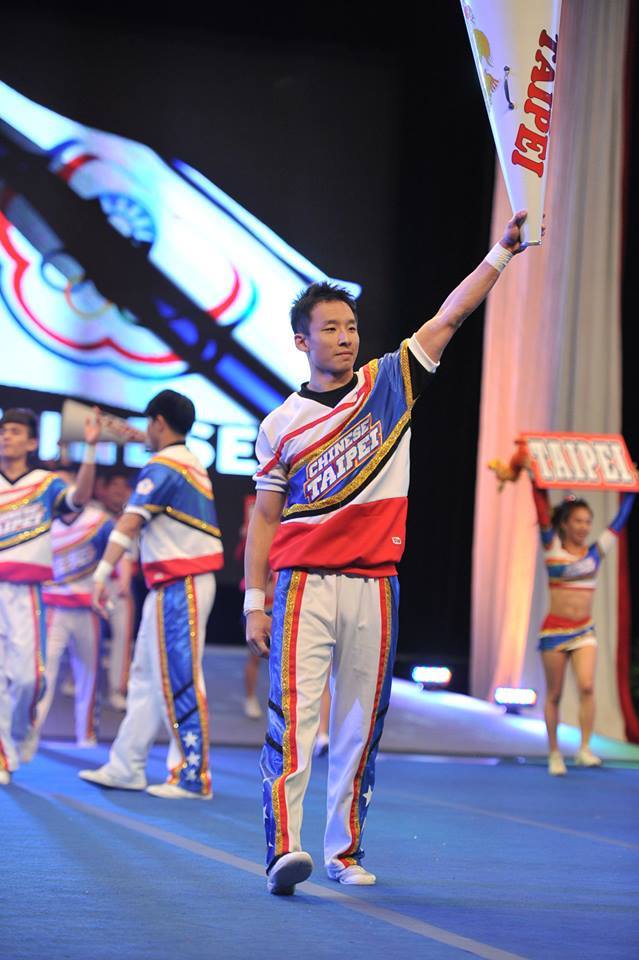
▲ Baldies was selected 5 times as a World Cup tumbling team member.
"Everyone says I'm talented, but tumbling is something I have absolutely no talent for."
As a student of the Physical Education Department at Fu Jen Catholic University, Baldies watched the constant flow of people through the department building, all wearing Chinese Taipei uniforms, which inspired him to become a national representative. So he went into seclusion and prepared himself; from August 2010 to April 2011, roughly one academic year, he withdrew from the school cheerleading club and reduced his frequency of practicing techniques with Monster.
The reason was that he wanted to focus on mastering "tumbling." Starting from the following Wednesday, he went regularly to practice at Tung Li Gymnastics and Normal University. Two more days each week he would train with the gymnastics team at the University of Physical Education in the afternoons, following a strict schedule, starting from the basics and building up solid fundamentals.
"I'm someone who's very afraid of flipping, especially back flip series," Baldies, already a national representative, confessed his deepest fear. "When no one is watching, I hesitate for a very long time." He attributed this lack of talent to a shadow from the day before a high school performance when a back somersault hit the ground and scraped his face. Even while practicing sometimes, stepping on the edge of the "foam pit" frightened him greatly. Sometimes before executing a move, he would deliberate for a long time, but tumbling's biggest enemy is "thinking."
▲ Practice after practice, overcoming the tumbling shadow (video embedded from Lin Yu-zheng's Youtube)
"Many athletes have strong comprehension—once a coach explains something, they can execute it perfectly," Baldies said that sometimes he really felt "a chill in his heart" because for him, advancing from A to B and achieving perfection required understanding the precise details and methods, then gradually working to match, adjust, and overcome it psychologically and through actual body movement. Through repeated practice and building confidence, he could execute the correct movement.
But even after giving himself time to master the fundamentals, when his seclusion period ended, Baldies hadn't perfected "twists." Yet looking at the other athletes he started training with, they could all do twists, but no matter how hard he tried, he just couldn't get it. "Maybe I'm just not cut out for tumbling," this self-doubt began to spread through his mind.
However, despite this setback, he never gave up practicing and continued to push himself. Then one day, he just did it, because "success never comes overnight; it's built through improving a little each day," When he returned to Monster, the first time he did a twist on the blue mat was when he flew to Thailand to compete internationally.
Baldies recalls this period, saying there was no spring floor, but the competition rehearsal went well. Although his body came apart during the actual competition and he felt a slight panic, worried his tumbling sense and confidence would disappear, when he returned home, he made rapid progress. On the spring floor, no matter how much he practiced, he could execute the moves.
So within just two months, he mastered higher difficulty tumbling moves like a full-in, straight body back handspring, and straight 180. "Once you get past one point, everything else falls into place. But before that, you really have to practice forever," This persistent spirit later led to his selection as a member of the Chinese Taipei tumbling team.
From last place in high school Division B to world champion—before getting here, you had to endure doubt, questioning, the urge to give up, and finally, determination.
▲ 2015 Chinese Taipei Cheerleading World Championship video.
"To be honest, the first time I was selected, I just felt like my dream had come true," said Baldies, who competed in five consecutive World Cups. "Finally stepping foot on American soil, finally seeing the Top Gun training facility—I could have been satisfied right there. I was practically floating, dealing with severe jet lag, just enjoying the novelty of everything. In that competition, we dropped one skill and took third place. After returning home, when people asked if I'd compete again next year, I wasn't sure myself and just said casually, 'Maybe.'"
Before the formal selection for the second year's (2013) World Cup, a close friend asked him, "What's the point of continuing to train like this?" He agreed at the time. Although he was selected, he was in a half-giving-up state, his attitude gradually loosening until competition day when he returned to the World Cup opening ceremony and stepped on the blue mat—he finally woke up. "This is my favorite place. Why would I want to give up? How could I think of giving up? Was I crazy?" After returning home, he made a firm decision to compete again next year: "I'll keep competing until I can't make the team!"
However, his mindset at that point was limited to wanting to "try hard" at the competition, not thinking about winning the championship. But a senior who competed in the first tournament and won the championship woke him up with one sentence: "Are we here just to perform in one World Cup, or are we here to win the championship?" "How is it possible? To defeat the American team, the Americans who win every year? That's too difficult, right?" Although everyone was not confident at first, after thinking it through, they realized the format was actually very fair. Even though the American team was extremely strong, every team still had a chance to gradually get closer to them.
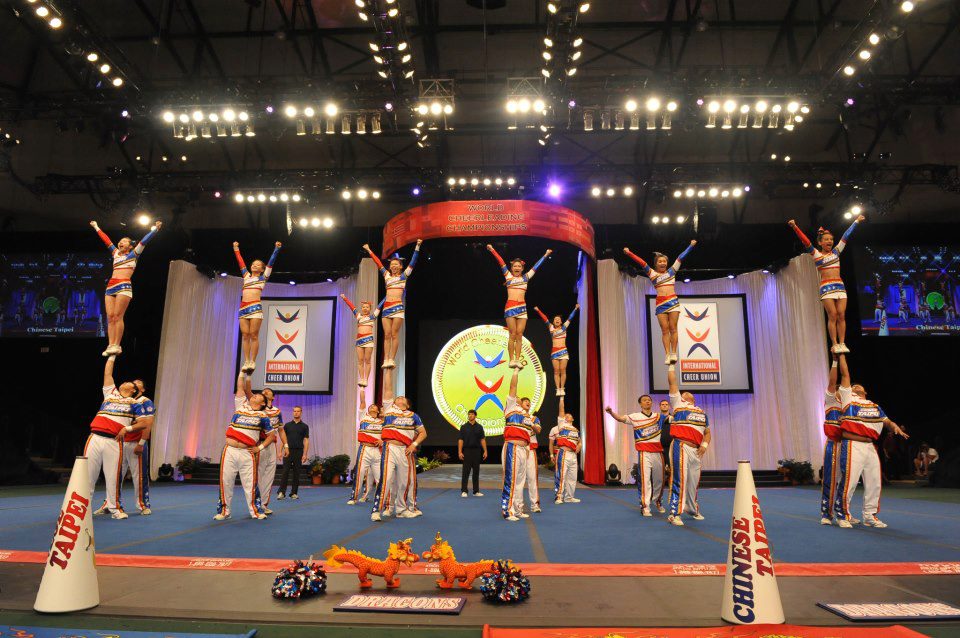
Regarding why they could defeat the American team in 2015, half of it was due to the coach's correct strategy. The team was arranged with 7 Rewind Qs (high difficulty, visible at one minute in the competition video), and during practice they constantly calculated the "success rate," not just for the group but also for individual members. If someone failed too many times, the coach would pull them aside for a review and tell them to push harder—all to avoid any possibility of dropping skills and losing points.
"This year, I really, really want to sing the national anthem on that stage," Baldies said before the competition. Add to that the fact that the athletes competing that year were all very strong, their mindset and pre-competition preparation were very thorough. Although they dropped the pyramid and some minor skills and didn't execute "perfectly," they ultimately won the world championship.
"Champion is Chinese Taipei!" When the World Cup announcer declared the champion, Baldies bounced up, unable to hold back tears. Teammates went crazy screaming, crying and hugging each other, because their dream had truly come true. "We had never stood in the center before." Watching the Olympic flag rise on the screen and hearing "the national anthem" play, nobody could even remember how to sing it, but they kept screaming. Recalling this process—"it was really amazing." Even two years after that triumphant moment of winning the championship, the memory remains unforgettable.
After returning home, spotlights surrounded them, various interview requests came in, even specialized program interviews were conducted, and performance engagements came non-stop. Some people even envied him, having won top three placements in the World Cup and received generous prize money, but actually for athletic competitors, the "National Sports Award" is the more important honor.

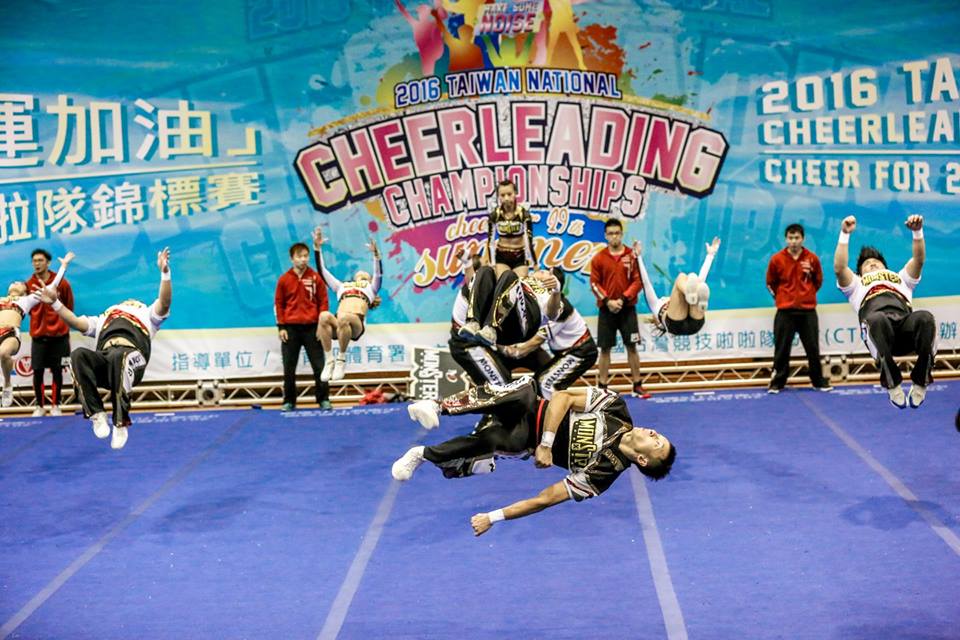
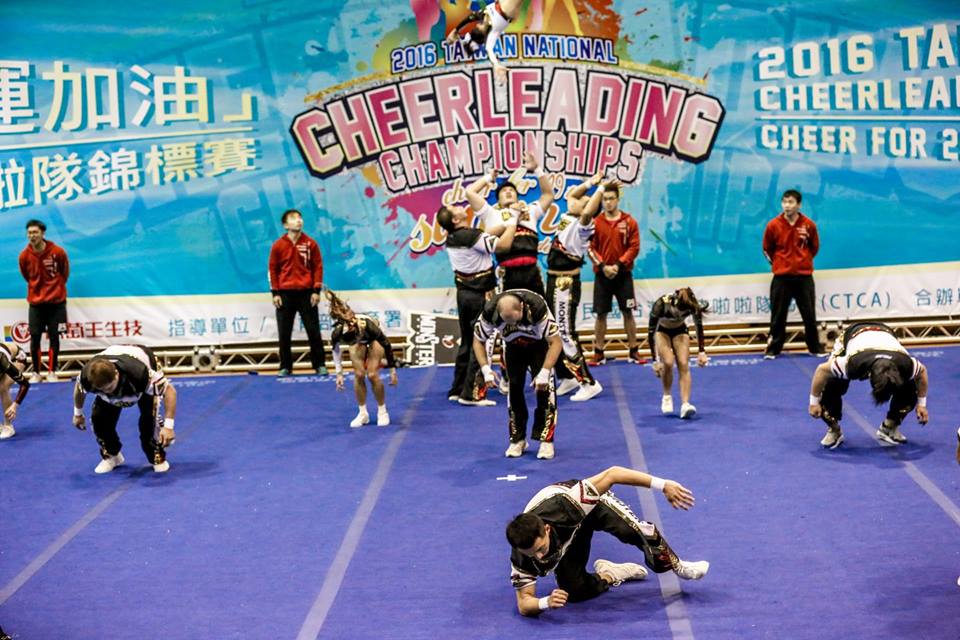
▲ Baldies is a member of Monster Cheerleading Team.
"This path was completely forged by me alone. There was no reference template."
Ten years ago, Baldies never imagined he would reach this point. At first, he just thought it was fun. In the middle, he actually considered switching to other fields, but he summarized these ten years with the word "destiny," believing he was lucky: "Everything came at just the right time." Looking at the athletes around him, many participated in the World Cup and became national representatives in their first or second year of university. But he wasn't selected until his fourth year and competed all the way through graduate school. Also, he didn't come from a "professional" background starting in high school. This path was "completely forged by me alone. There was no reference template."
But this "self-forged path" didn't have his parents' support at the beginning. Baldies said his parents opposed it from start to finish. Training for cheerleading caused him injuries to his back and put his studies aside, not that he cared. Plus, university practice sessions didn't end until after 11 PM, and he spent his weekends at the training facility. His family couldn't understand what cheerleading could lead to or whether club participation was really that important. His mom even asked him, "When are you going to stop practicing?"
Baldies originally had the attitude of "there's no point explaining to them because they won't understand anyway," and wasn't very willing to communicate with his parents. But then he had a change of mind: "Because of lack of understanding, they opposed it. So I should help them understand. This was also my first time discussing my life plan with them." That year he was a junior, and he told his parents about his future plans: he wanted to pursue teaching certification so that beyond his athletic career, he'd have other options. He wanted to become a World Cup athlete and bring honor to his country. In the following years, all of these came true.
"The most regrettable thing in my cheerleading career is not having met someone who constantly pushed me. When I was young and cocky, I missed out on some valuable teaching from senior athletes and coaches."
Baldies later became a coach for the Yulin High Vocational School cheerleading team. His identity shifted from athlete to coach. He believes a coach must make the best decisions within limited time, must understand athletes' abilities well, can't set difficulty too high, and must have clear, achievable goals. Therefore, figuring out how to balance training is very important.
Over the ten years, he's seen many athletes quit halfway through, which he finds very unfortunate. Baldies categorizes cheerleading athletes into three types: "talented and hardworking," "talented but lazy," and "ordinary talent but very hardworking." The first type is extremely rare. The second type is quite common—a flash in the pan—which makes him feel it's a shame. Those who actually reach the top level, step on the World Cup stage, or achieve a certain level are actually mostly the third type. This categorization applies not just to cheerleading but universally across all fields.
When his students reach senior year, he has them write their life plans on a blank A4 sheet. Whether or not they continue cheerleading in the future, as long as the student is clear about their future goals, that's fine. But if they want to continue and pursue cheerleading, even if they're no longer on his team, he will do everything he can to get his student back on track.
Because he never had such a mentor, he has vowed to become a reliable senior or coach: "If you ever have worries or your state isn't good, if your mind isn't right, I will actively check on you." He tries every way to open students' hearts and redirect their focus back to cheerleading.
One student in particular left a deep impression on him. After being accepted as a sports scholarship student, due to family circumstances, he frequently had to work the night shift. The money he earned went to living expenses, and excessive work left him in poor spirits, causing him to neglect his beloved cheerleading.
"Then I don't want to study!" the student responded. "But what about the promise you made to yourself back then?" Baldies tried to remind the student of his original passion. He continued to check in daily, asked teammates to pay special attention to him, and tried to help the student think about what was really good for him and what mattered most. Eventually, the student's state gradually improved, and he learned to balance and manage his time.
Changed Profile Picture to "Lying Down Photo"—Because "People Need to Learn Self-Mockery" and Forced Himself to Face His Shortcomings
▲ Changed to an embarrassing photo as his cover photo, self-mocking and forcing himself to face it.
Actually, my impression of Baldies is still from when he was a Taurus freshman with a "fiery" temper. At that time, the combinations in university weren't very difficult skill-wise for those of us who had practiced cheerleading in high school, but for the newly joined members, they would naturally need more time to practice and understand. As a Taurus, he once said, "This is the move I was doing in 10th grade—why can't the senior students do it well?"
He didn't say they "couldn't do it," but that they "didn't do it well," which shows how demanding Baldies is about every movement. He describes himself as a very disciplined person. Before every practice, he plans what he needs to work on. When he arrives at the venue, he doesn't just lounge by the mat; he actively steps in to provide spotting.
Someone like him, when he fails at a movement on the mat or makes a mistake, naturally won't let it slide. "I think people need to learn self-mockery," So for a while, he changed his Facebook profile picture to an embarrassing photo of himself tumbling face-first on the mat. "Because I felt it was a disgrace, so I needed to remind myself." Where you fall, that's where you stand back up. With this self-mocking approach, Baldies believed it forced him to face the situation, let it go, and then improve. He knows where he still falls short, his teammates can lighten the mood about it, and he himself feels more relieved.
In his 12-year journey with cheerleading, the most important thing Baldies learned was "self-criticism," because many people only criticize others and never themselves. Through mental preparation before every practice and self-reflection when movements aren't executed correctly, he's learned to understand himself better. Now he also occasionally writes articles about tumbling on sports forums, hoping to help people who want to enter the tumbling field.
【Baldies' Column Articles】
Standing Full Isn't Impossible—Understand It and Master It!
Little Sisters Can Do Standing Full Too
Lai Hong-ting (Baldies) Born 1990
12 years in Competitive Cheerleading (2005~2017)
2015 World Cheerleading Championship Gold Medal
2012-2016 World Cup Cheerleading Championship Chinese Taipei Team Member
CTCA Republic of China Competitive Cheerleading Association Technical Coach & Staff
Fu Jen Catholic University Competitive Cheerleading Team A Coach
Yulin High Vocational School Competitive Cheerleading Coach
MONSTER Competitive Cheerleading Team Member
Fu Jen Catholic University Master's Degree in Physical Education