"I can do an interview, but before that, let me interview you for an hour," I remember sending out the interview details, self-introduction, and key discussion points the night before, filled with nervousness. I thought the engineering field was beyond my expertise, so receiving this response was both a relief and surprising—it was my first time meeting an interviewee who wanted to hear the interviewer's story first.
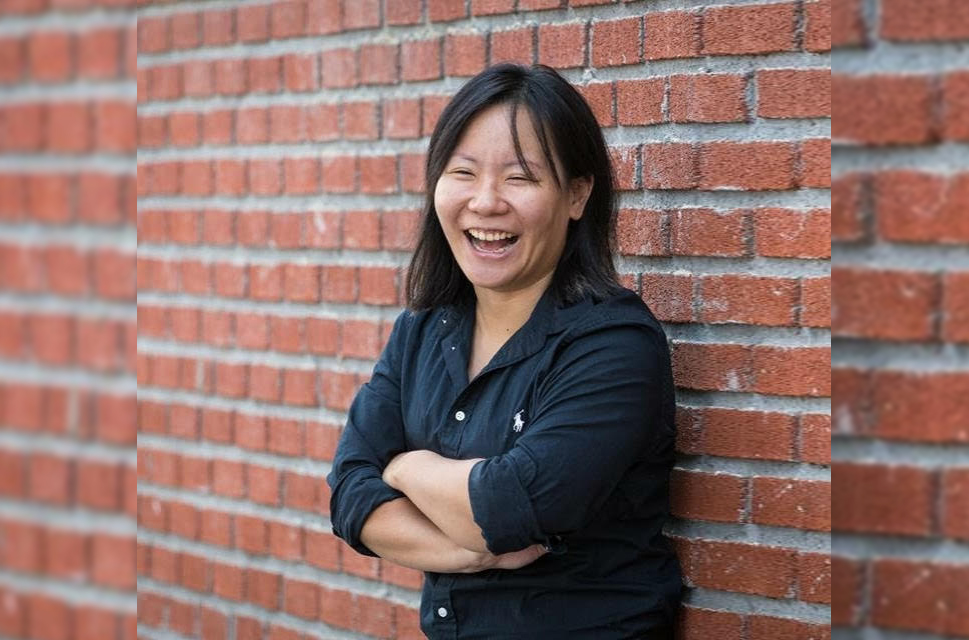
This unique message came from Polley Wong, working in the US, a woman who transitioned from engineer to female founder, infusing technology into the architecture industry. Both her open mindset and life experiences show that Polley is definitely a female entrepreneur with strong ideas about the world. In October, she returned to Taiwan to participate in Asia-Pacific's first open-source project exchange conference initiated by a female community, an event focused on discovering promising tech teams and cultivating Taiwan's next generation of tech talent.
"Hello!" Hearing Polley's warm and cheerful voice through the phone felt comforting. She generously shared her experiences of working and entrepreneurship in the US, the social and cultural impacts she's encountered, and analyzed the anxiety and unease that young people and women in Taiwan experience due to societal values.
"I discovered that in Western societies, age isn't an issue, but Asian women have many strange barriers built for them, and too many 'shoulds'," Polley is an active advocate for workplace gender equality. She shares: "Asian women at 30 often face unnecessary pressure and expectations from society, seeming to need to meet external expectations to be called a true professional woman, especially in technology and engineering."
In the prevailing Asian perspective, female workers or entrepreneurs must also balance work and family, or sacrifice for family or children, even serve as the primary caregiver. Doing well at work seems nearly impossible. Though society's perspective is gradually becoming more open, men are simply recognized for being "successful in business."
However, in Western society, it's common for women in their 40s and 50s to return to university for classes or advanced degrees. If we shift the scene back to Taiwan, we often label such "older" women with the tag "chasing dreams bravely." In fact, pursuing dreams and finding your ideal self never requires deliberate "bravery" or external validation.

(Photo: Polley's company partner Briana Y. Earl, advocating for gender equality on New York streets)
About Life: Understanding Your "Learning Language" Creates Multiplied Effects
"Everyone has their own 'learning language'," she analyzes. Language isn't just spoken words but includes text, body movement, and tone. "For example, my listening skills are better than my memory," Polley learned English grammar, intonation, and vocabulary day and night through foreign TV series, audiobooks, and Podcasts. It's almost unimaginable that she moved to the US for studies and entrepreneurship at 24. "I believe everyone has their own learning style; don't limit yourself because of others' opinions and methods."
Polley gives two examples. First, as a child, because her father was a musician who wanted her to learn piano, classical music already had set playing methods and emotions to meet public expectations. For 12 years straight, sheet music sat before her, but she couldn't play it, disappointing teachers and family. However, when she later discovered improvisation and "jazz," she found that with just a melody, she could fill in the blanks and create her own rhythm. Her progress soared, her attitude shifted from passive to active, and she played piano beautifully.
The second example is when her father wanted to learn inline skating. Because he was just starting, his body was stiff and very tense. Polley considered that her father might also be an auditory learner and could learn inline skating using his most familiar learning method. She told her father: "Use your ears, listen to the sounds under your feet, feel the rhythm." Immediately, her father, using sound as his "first language," quickly shifted his focus to the sounds under his feet. His mood gradually relaxed, his body naturally moved with the rhythm, and by switching his "learning language," he mastered inline skating.
Polley wants to express: "Whether it's entrepreneurship, learning, or anything in life, you must first understand yourself, find your passion, find your own "language" so you can persist on a path others can't understand and create something different from others."

(Photo: Co-hosting Graph Database Workshop with Open UP Summit, with 50/50 participation from male and female engineers)
Entrepreneurship: If You Follow Convention, You Won't Find New Answers
Currently, Polley has founded her second company in New York. Reflecting on her first startup, it came after she ended two years as an engineer and considered what else she could study. Looking back at her life journey—born in America, raised in Taiwan, returned to America for work, constantly switching between the two ends of the globe, changing residences and social circles—the word "belonging" has always felt like a gap she couldn't fill. Even after learning how to get along with friends, her heart still felt empty.
Polley wanted to have a stable place of her own and hoped to have the ability and opportunity to convey this idea to others. She returned to school to study interior design, hoping to master the art and science of "belonging" to help people create their own homes. But Polley, with a background in computer science, immediately felt something was off. "The technology in interior design and architecture is really not good; there's huge room for improvement."
Upon entering interior design, Polley discovered: clients couldn't control the process and budget for materials, facilities, and space design; architects couldn't track detailed client requirements; construction workers couldn't report site changes timely and accurately, making project management difficult. Communication quality and frequency were insufficient; the communication method was one-way and non-transparent, leading to waste of resources, money, and effort. The final product often didn't match the client's original intent.
"If you follow the current ways of society to do anything, you won't find new answers." At that moment, Polley saw an opportunity and decisively decided to first establish an interior design company, We Create Group, to deeply enter the architectural design industry, experience the pain points of communication, and simultaneously research new technology to find ways to save costs and increase efficiency.
"I kept thinking about whether our communication problem stems from the fact that buildings are 3D objects, yet we keep communicating in 2D ways," she says. But to research communication blind spots, she needed to convert analog communication materials into digital files. They digitized communication content, conducted text analysis after recording, and developed JITA software to make data visualizable.
JITA is Polley's second startup project. She has independently researched the product for a year and a half. Her design for JITA's future is to use graphical data to deconstruct dialogue information between people, saving architects and clients time and effort in communication.

Open Source Co-Creation: Transcend Society's Standards to Create Unique Products
Since moving to the US for work, Polley returns to Taiwan every two to three years. This year, for the first time, she serves as a speaker at the Open UP Summit, an event marking Asia-Pacific's first collaboration between international serial entrepreneurs and local Taiwan teams. The goal is to help future founders start by contributing to international open-source projects, develop international product vision, community connections, and resource integration perspectives.
For this open-source community conference, Polley stays in Taiwan for a month and personally prepares an 8-day free workshop to co-create JITA with participants, searching for like-minded partners through talent development. Polley leads 15 people including university professors, front-end and back-end engineers, career changers, and those interested in the field to experience the co-creation spirit.
The open-source product workshop doesn't just manage the product; it also manages people and culture so that after the product is created, it can achieve multi-level management and build a self-sustaining ecosystem, benefiting society, business, and individual technical improvement.
"Open design is beautiful because society has many conventions and obstacles that set many barriers for us." For instance, education—in this era, without a university degree, enterprises can't trust your value; in job hunting, industries want candidates to have relevant experience to get a foot in the door. But these obstacles don't exist at Open UP Summit. The spirit of open-source products is completely creative and free. Through mutual collaboration without worrying about external judgments, abandoning societal standards, you can create products different from now. The open-source conference might sound entirely within engineering scope, seemingly inaccessible to non-professionals. But digging into its core philosophy, it's actually filled with romance and idealistic elements.
Future of Work: Taiwan's Inner Foundation and Entrepreneurial Mindset to Transcend International
Observing young people's work situations in Taiwan, Polley believes you must first understand yourself, honestly know your strengths and weaknesses, and not be afraid—fear creates blind spots, preventing you from acknowledging reality. You must overcome shame and fear to know your value and accept your imperfections.
Regarding collaboration with others, Polley advises young people to hold onto their core values. Self-confidence is unrelated to work and related to self-acceptance. "When others are added to your story, it's a bonus. If it's not a bonus, there's no need for unnecessary effort." But if your focus becomes whether you add value to others' stories, your mind becomes hijacked by others, seeking their validation to find yourself. Though you know such dependent relationships are negative, society is unfortunately overusing this unhealthy entanglement.
Polley mentions: "You don't need to be an entrepreneur, but you need 'entrepreneurial mindset.' When facing problems, know how to use resources and solve them yourself. If you want something, no one should simply give it to you; you need to ask for it and create your own way to gain it. In contrast, 'employee mentality' lacks initiative—one order, one action. When doing something, you expect a guaranteed reward. Unknowingly, this 'consumer mentality in business' places you at the end of the economic industry, with job titles and salaries defined by others.
Actually, Taiwan has great talent, good technical skills, good attitudes, willing to learn and work—not inferior to Western talent. But Taiwanese need to strengthen communication, not worry excessively about others' opinions, deal with facts pragmatically, speak directly, develop entrepreneurial mindset, and eliminate biases and noise to create value for your own career.

Open UP Summit
Event Date: 2019/11/30-12/1
Event Location: Sanatsuo Incubation Park Star Rocket
(Bilingual Chinese-English simultaneous interpretation) Asia-Pacific's first annual conference focused on open-source products, bringing together communities and experts. Over 25 diverse cross-disciplinary talks, workshops, open-source project exhibitions, over 30 domestic and international speakers, and 4 tracks—Data/Design/Vision/FutureofWork—providing attendees with open-source knowledge and industry insights!
👉 Ticket purchase link: