Jeffery went west to mainland China for 4 years, team management philosophy: "must possess one level higher capability" (Photo/Provided by Jeffery)
"Nobody needs to be responsible for your knowledge," after the formal interview ended, I admiringly asked Jeffery "how are you so capable," but he stated this sentence firmly yet gently, filling my heart with shock. For me, this is what makes interviews interesting—when others simply articulate the ordinary in life, yet it becomes the extraordinary for most people.
Since university classmates, Wang Yan-Chi, Jeffery, was already someone who could lead a team and transform the department's annual small event into a large-scale activity across the entire school with 200 teams participating; in high school, attending a performing arts school and once considered a child who didn't love studying, nearly ten years have passed and he has become a Vice Director of Media Planning at a multinational group's Shanghai branch, leading a five-person team managing over 100 million yuan in mainland market operations. This year, he transitioned to Asia-Pacific's largest Chinese AI company, and at 28 years old, he became Product Commercial Planning Director.
"When I join a company, I feel I gain whenever I can learn something, because the company pays you to work and contribute, not to learn" I remember around the time we were about to enter society, I saw it superficially, only caring whether the starting salary matched my education, but Jeffery was different. He comprehensively assessed salary, benefits, promotion, company situation, industry opportunities and changes, made thorough plans, and was even willing to start as an intern. After joining, he equally worked late nights and weekends, but within just over a year, he was recruited to the mainland branch, maintaining exactly this attitude.
Analyzing Cross-Strait Differences! Taiwan Lacks "Market" Concept, Mainland Faces Talent Shortage
Discussing cross-strait work differences, Jeffery believes Taiwan relatively lacks the "market" concept, with north, central, and south regional product marketing models having little variation, because for enterprises and advertisers, cultural distinctions aren't that significant. However, in mainland China, with vast territory, multiple ethnicities and cultures, while markets can be segmented into North China, Central China, South China, first-tier, second-tier, third-tier and below cities, even Hangzhou and Chengdu, both new first-tier markets, have distinctly different consumer insights and media usage behaviors. The market environment is relatively complex, creating differences in marketing perspective, which is especially evident in media planning.
However, the mainland market faces extreme talent challenges. Hardworking young people mostly start their own businesses, while other first-tier market young wage earners tend to get salary increases through frequent job-hopping, trying to quickly get through tedious and dreary entry-level stages. While Taiwan has this trend too, the frequency among mainland people is much higher—job changes every six months to a year. Because the environment and market are so vast, there are too many positions to jump to, creating serious gaps and quality issues in "talent development." Jeffery shares that he prefers to find workplace newcomers to cultivate, because experienced people are not only costly but may turn out to be unprofessional with bad habits.
In contrast, this becomes Taiwan's advantage. In planning, PR, advertising, and media agency fields, Taiwan is relatively mature and doesn't lack talented professionals. Because Taiwanese people stay in entry-level positions longer and build solid foundations through practice, they are tested and proven.
However, now entering the mainland market, in some industries Taiwanese people no longer have the competitiveness of the past. In salary negotiations, they may not have an advantage, so they must recognize their strengths and weaknesses and set phased goals, lowering expectations when first going west, then discussing promotions after settling in.
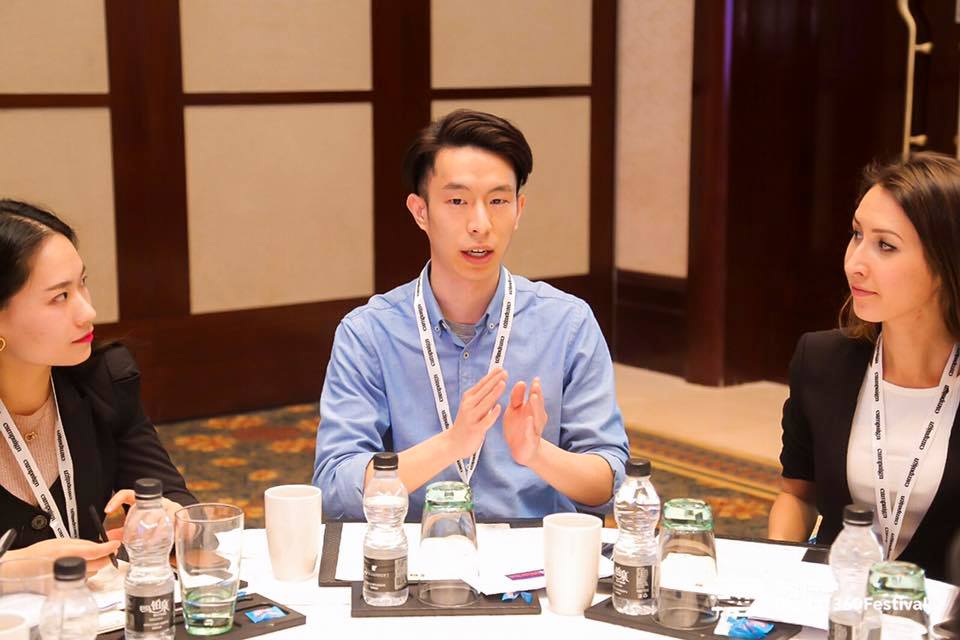 Focus on goals, continuous learning, and view management from the execution perspective, treating everything as "cultivation" (Photo/Provided by Jeffery)
Many Opportunities, Large Market! Full of "Illusions" About Going West, Must Focus on Goals
Many people are "full of illusions" about the mainland market, only seeing surface-level opportunities, a vast market, chances to develop themselves and make a big splash, overlooking the necessary administrative processes and tedious matters required for managing such a large-scale business. Many leave because they can't tolerate it.
Jeffery offers his response method: "focus on personal goals." Because many people feel that administrative processes, expense reports, logging work hours and such things take up time for learning or exercising "professional ability," treating these things as mere "to-do items" without taking them seriously, resulting in scrambling to work when deadlines approach, causing stress and leading to frustration.
But when you shift perspective and learn from a management mindset, you'll feel it's a form of cultivation, with more opportunity to examine how large an enterprise's scale is within an industry and how complex its organizational structure is. Afterward, you can understand what systems are effective and what factors reduce employee enthusiasm. Thinking about this at the execution level provides reference for the future when entering management.
Don't deny all learning opportunities just because you're in Taiwan or encounter a harsh workplace with an emotional boss, because in advertising and media agency fields, Taiwan's market is relatively solid, and middle and senior manager positions have been honed on the front lines for very long. You can definitely learn many things from them. Even supervisors others think "only know how to talk" can teach you proposal techniques—don't just complain about your boss for not teaching you.
 Jeffery went west to mainland China for four years, transitioning from media agency to AI industry with high self-demands (Photo/Provided by Jeffery)
Observe Management from the Execution Level! First Achieve "One Level Higher Capability"
With a different standard for his team, Jeffery says "My standard for the team and myself is that members can reach one level higher than their position," for example, when a manager wants to become a senior manager, don't wait for promotion but try doing what a senior manager does. If unable, find the problem and solve it. Because such "talent is a bargain for the company, not someone promoted then trained," for supervisors too, promoting someone upward gives yourself time to advance to the next level, rather than still needing to care for the newly promoted person, creating positive team circulation and maintaining team competitiveness.
Regarding what difference there would be if he hadn't chosen to work in mainland China back then, Jeffery believes he wouldn't necessarily develop poorly in Taiwan and could accumulate considerable experience, but there would be some gap with the globalized perspective, mobile payment, and AI insights encountered in mainland China.
Because mainland China has a hot and mature capital market, when mobile payments are universal and globally leading, many advanced digital business models happen first in mainland China. Like in the AI field, through mobile payments, mobile internet, and government internet+ policies generating data, AI commercialization has relatively more opportunity to develop than in other markets. Many international enterprises place their Asia-Pacific R&D teams in mainland China. You must be in mainland China to truly sense "the world is changing, and it's changing fast."