Let me share some thoughts on #leaving my job to start a business, which also serves as a reflection on the end of 2022.
First, "setting up a company" isn't actually that difficult, but making a company profitable and sustainable, with employees and a business model, plus the ability to hand off responsibilities, provide training, and build company knowledge assets—these require the right timing, circumstances, and people working together. Honestly, it's incredibly hard, almost the biggest test of one's life.
I stabilized my entrepreneurial foundation by leveraging my past expertise in writing, community management, combined with my network and relationships with upstream and downstream vendors and company service features. Knowledge monetization and writing are among my interests. Before focusing on entrepreneurship, I worked for about 6 years and took on freelance projects for over 10 years.

On this entrepreneurial journey, I feel quite fortunate. Much of my luck comes from many business predecessors who were willing to open their hearts, teach without reservation, and mentor me, allowing my business and financial acumen to continuously improve over these two years.
If you have a full-time job and want to try entrepreneurship or start a solo business in the future, and feel stuck on "how to survive," I hope my small experience can be shared with you.
Many people jump into entrepreneurship once they find a business that "feels" profitable, without considering whether they have enough professional knowledge or technical expertise in that field—like franchising a beverage shop, selling food, or opening a coffee cafe.
But the operating costs of a company are truly much higher than imagined. For example, we run a service business with no physical storefront and fewer than five employees, yet we still need these ten basic items:
-
Accounting and bookkeeping fees (monthly taxes, annual taxes in May, etc.)
-
Hardware and equipment (business tools need to be factored into depreciation)
-
Health insurance and labor insurance premiums, pension contributions (companies with five or fewer employees don't necessarily need to establish a labor insurance unit, but we did because we participated in a youth flagship program)
-
Employee salaries + project bonuses
-
Various software fees (Google Workspace, Slack, Google Drive, Canva, Nueip HR system, etc.)
-
Utilities
-
Office rent (recently rented a small space)
-
Various project development expenses
-
Outsourced labor costs
-
Project costs and miscellaneous expenses
These are pretty much the fixed monthly expenses we have after two years of entrepreneurship. Spread over a year, it amounts to millions! (Shocking)
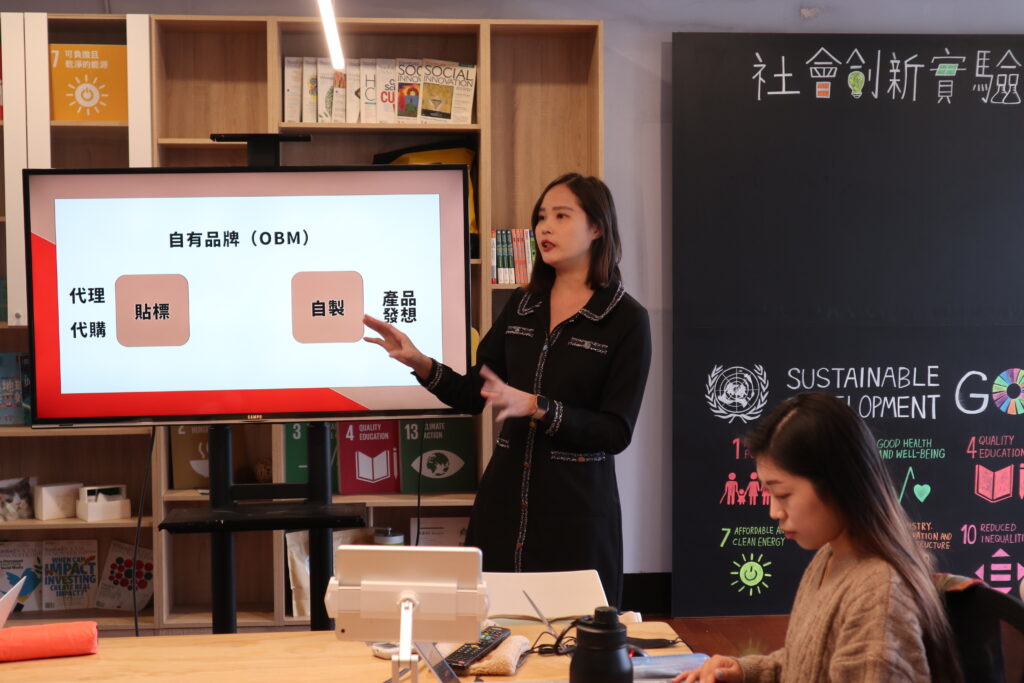
I never thought I'd have to manage finances at this scale, but after entrepreneurship for a while, I realized I really needed to face it head-on. So last year I took United Genius's annual CEO class, and earlier this year I took accounting and finance courses. After all kinds of hard work pushing me to grow, I can now handle millions in cash flow with ease, but reaching the tens-of-millions level is still an unclear road ahead.
Speaking of which, how exactly do you make money and survive?
Actually, if you don't have substantial capital, here are four approaches to consider:
- Have customers first, then think about (leaving your job to) start a business
Many people think entrepreneurship is about burning your bridges—make the decision first and figure it out later. While this kind of courage is admirable, the reality is that if you're not someone with assets, you'll just starve yourself and hurt those around you.
About three years ago, I had almost no savings. Although my freelance income was okay, it wasn't stable. It was so unstable that if I had a 60-day payment term, I'd be in trouble. If every vendor had 60+ day terms, I'd really need to ask my family for help.
There was a time when I was living in poverty, which affected my family's and my partner's trust in me. They didn't trust that I could repay borrowed money, and they said harsh words like "you need to support yourself with your own abilities." After that, nobody would lend me money until I created a stable business model. After that, I could get short-term loans anytime because I could repay them.
If you don't have substantial capital, "you should have customers first before you even talk about bravely leaving your job."
First make sure your expertise can create value for others, and that the value you create can sustain yourself without dragging others down. Only then should you think about leaving your job and starting a business—not the other way around. People often ask me how to assess the right timing. You can compare: if your side gigs or multiple income streams consistently exceed your main job salary, even surpassing it several times over, then you can start moving toward full-time entrepreneurship.
- Plan your annual budget so that this year's you supports next year's you, leaving your future self with some breathing room to increase organizational value.
At the beginning of this year, our financial situation wasn't great, which forced me to reflect deeply. Combined with some things that happened in May and June of this year, I became even more determined to "let this year's self support next year's self." So at the end of the year, I actively pursued new business development.
When reviewing the annual budget, I calculated the operating costs mentioned earlier across "a full year," and factored in potential risks to determine how much the company must spend annually at minimum.
Next, before the end of this year, I sign contracts for next year with the goal of "earning more than a full year's expenses." This way I solve next year's financial concerns in advance, and then I have the ability to think about the year after, the year after that, and beyond—without having to chase money all the time.
Many business predecessors might plan for five or ten years ahead, but since we're just starting out with limited capital, we're being very conservative. To achieve this goal, I've temporarily put aside what I truly want to do.

- Pursue profitability first, then pursue your ideals
Ensuring an enterprise has sufficient profit is the entrepreneur's responsibility. I used to think this kind of talk was too commercial and paid it no mind, but when I adopted this attitude toward money, I received a clear warning: "If you don't manage your finances, your finances won't manage you."
In previous years, I hoped to do what I loved, even if the journey was tough. But as I looked further ahead, I discovered that the true foundation for beautiful ideals is taking full responsibility for yourself and others' lives. You can't let "ideals" affect people's lives and livelihoods, or even relationships with those around you.
After struggling painfully, I decided in the second half of this year to temporarily set aside what I truly want to do and prioritize strengthening the business fundamentals first, then move toward my ideals and achieve the goals and expectations I set for myself in the previous point.
- Optimize your business model to maximize value and profitability
Many people worry about the instability of entrepreneurship, especially when vendors offer 60-day, 90-day, 180-day payment terms or longer!
Basically, before I invoice these long payment terms, I treat it as if I'm doing charity work—any payment received is a subsidy. However, this relates to my company's operating costs; mainly, my accounts payable aren't huge amounts, so I can afford this attitude.
But in these unstable circumstances, how do you inject stability?
Beyond adjusting basic payment terms, the more important thing is adjusting your business model!
For example:
(1) Deepening partnerships: If you were previously doing one-off projects, you could negotiate from doing one per year to five per year, to eventually signing long-term contracts, increasing cash inflow.
(2) Annual budget paid in installments: If you tend to spend money as soon as you get it and invest in the next product, you can negotiate a complete budget package and have the client pay you monthly. If you have multiple clients like this, reaching a point where monthly payments cover your fixed corporate costs, that's ideal. At that point, leaders don't need to be stressed about cash flow cycles in the short term and can focus energy on deepening quality and adjusting organizational structure.
While I haven't been focused on entrepreneurship for very long, my growth curve is probably approaching vertical compared to when I was an employee, and my perspective on things has shifted. There's still much to continuously learn on this path, but I hope some practical experience can help those who need it :)