"I'm here to make money, I don't accept free traffic exchange!" I once heard a blogger insist on this principle, believing that their articles and works were well-written and meaningful, requiring lots of effort to produce—so why give them away to others for free?
Yes, actually this thinking isn't wrong. So then, why do platforms and websites like GOOGLE, FB, and YOUTUBE offer free services to everyone?
You may have heard "nothing is free, everything costs," but on the internet it's the opposite—"the most precious things are free." Online, the most valuable asset is the traffic that each reader contributes to you, because traffic can not only be monetized, but also accumulates your reputation. Over time, you can develop other businesses, so why not seize the opportunity for free traffic exchange? (Of course, if you're already a celebrity, that's a different story)
But what exactly is traffic exchange? Think back—haven't you seen videos from certain specific influencers or bloggers featured across different news outlets? Did they buy ads? To avoid awkwardness, let me use my own example:
If you followed my fan page before the end of last year, you should know I filmed a video titled 【Just Want to Go to the Next Stop...Visually Impaired Friend Nike "Called Out Bus Numbers" and Waited 1 Hour with No Bus Willing to Take Him】
This video sparked lots of discussion, and within ten minutes of posting, it already had 50 shares. Then various media outlets inquired if they could use it, and all promised to tag my fan page when sharing the post and include a hyperlink to the original in the article. The video got covered by over ten media outlets, including Eastern, United Daily, ETtoday, SET, and Apple Daily—all among Taiwan's top news media.

The video's results were: 【Views: 77,000】【Reactions: 1,148】【Shares: 274】. Compared to my follower count at the time of around 18,000, the views were more than four times higher, with video view growth exceeding 1000%.

When I made the video, it wasn't for traffic—I simply wanted to share the story. But because the content had topical value, high shareability among users, and educational meaning, many media outlets wanted to license it. I didn't ask for payment (no fee), and we agreed to use tagging to promote my fan page. Over time, people who didn't know me discovered that 【Karen Yang】 makes videos addressing social issues, and gradually they started following my fan page. This not only grew my followers but also accumulated my reputation (though far below actual influencers), and now I even write workplace articles (XD)
【Social Media Management Philosophy】
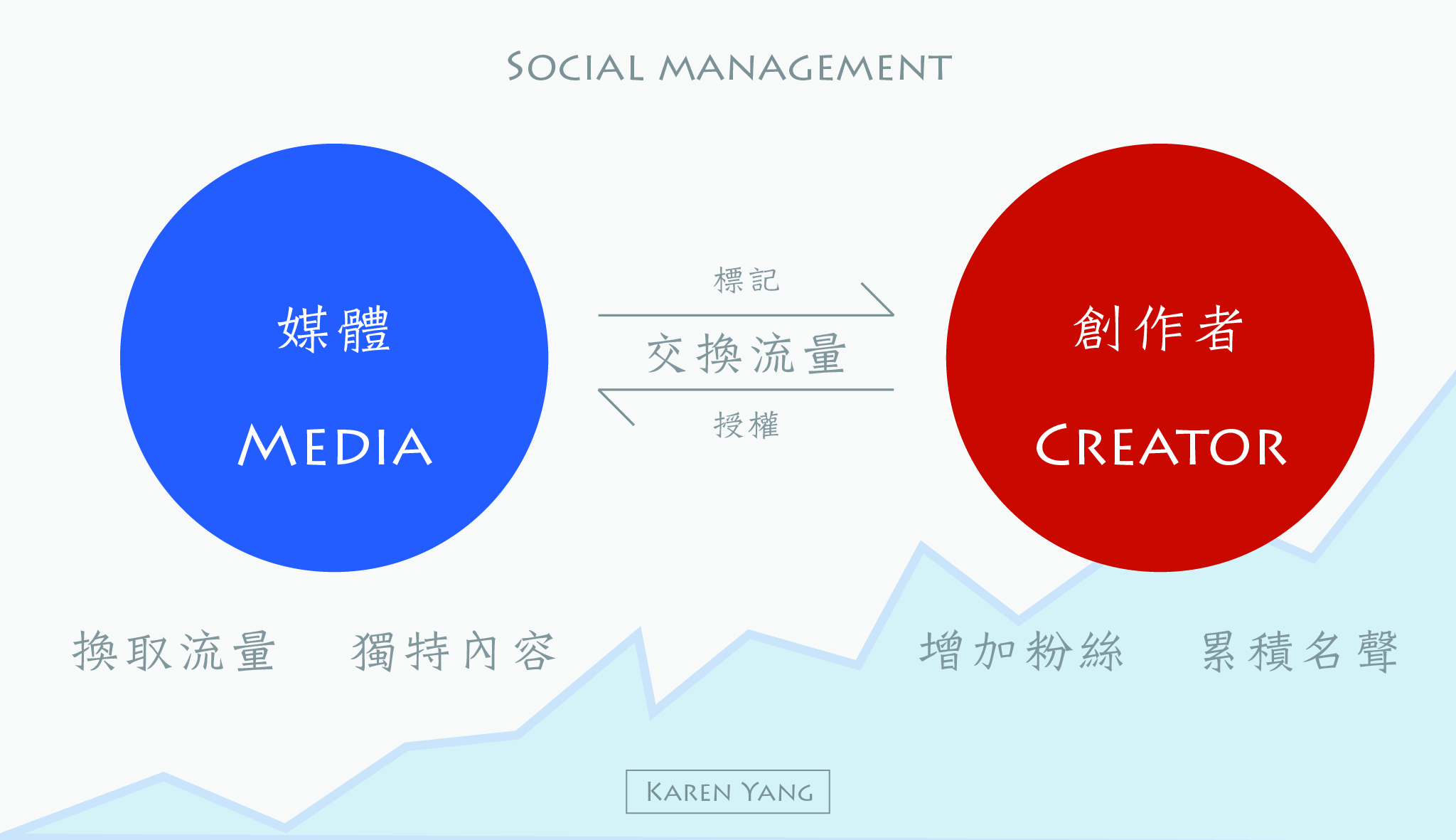
Managing social media has never been about speed—it's about going viral. Before virality comes preparation. During preparation, through traffic exchange with news media, both parties benefit: media outlets get unique, quality content and videos with traffic, while creators gain followers and reputation. They complement each other, so don't naively think struggling alone is enough—that's exhausting. But the benefit is that your fan loyalty will be higher! (Though there are celebrities who go viral unexpectedly, but most are accidents not worth discussing here.)
(↓Media exposure and creator output—traffic exchange complements both)

Normally, reputation accumulation doesn't happen fast—it takes over six months. But the way to keep growing is through continuous output. Traffic exchange is like constant self-promotion. In the competitive internet landscape, find your unique niche and positioning. Eventually, users become conditioned, and they'll naturally visit your website or fan page for your content. Eventually you can charge for tutorial viewing or accept sponsorships to increase income.
For example:
【Want to learn English】→ A-Drop English

【Toy unboxing】→ An Qiu

【Comedy】→ Cai Aga, HOW HOW

These YouTubers have been cultivating their channels for years. They didn't go viral overnight—they were prepared early, so when the viral moment came, they had energy to explode.
(↓Content is king. Managing social media is never about overnight virality, but whether you persist after you go viral)

(Related topic: Failed Marketing: Fixated on "Internet Beauty" Popularity Sending Free Trial Products but Forgetting Brand Purpose)