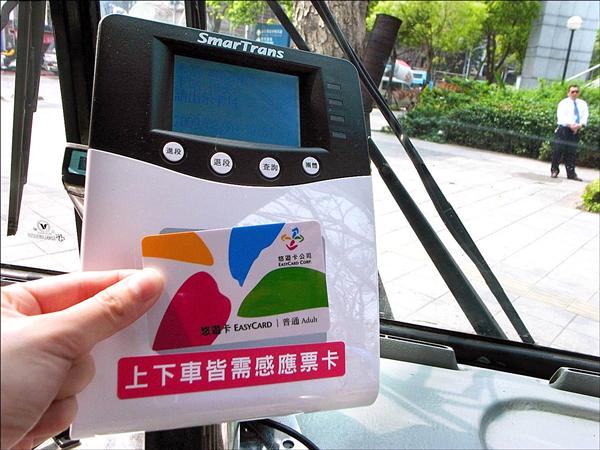
Starting in July, Taipei and New Taipei buses began requiring passengers to tap their cards for both entry and exit. Whenever new policies are rolled out, they typically trigger complaints such as "inconvenient" or "too much hassle." However, this time residents of Taipei and New Taipei showed high acceptance, and bus drivers broadcast reminders along their routes to ensure passengers tap their cards both when boarding and alighting. That said, didn't Taichung and Tainan already implement entry/exit card tapping long ago? Why is Taipei and New Taipei so far behind? In fact, the underlying logic is filled with strategies and data collection related to people's lives.
Let's look at the ridership numbers for Taipei and New Taipei buses. Taipei accumulates 470 million trips annually with 18 million bus operations, while New Taipei accumulates 300 million trips annually with 13 million bus operations. These numbers are quite substantial. However, in the past, these figures were not used for lifestyle research. But what data can be collected now that entry/exit card tapping has been implemented? Why is data collection even possible?
Two Major Policies That Have Driven Card-Tapping Data Collection
To answer this question, we must first review two key policy changes from the past.
One: 2015 | EasyCard Real-Name System Policy
The registered-name system was introduced because when an EasyCard was lost or damaged, the balance inside could not be refunded. After the registered-name system was implemented, the EasyCard became linked to your identity, allowing for card loss reporting and replacement, and the remaining balance could be transferred to a new card for continued use.
Two: 2017 | Financial Supervisory Commission Approved EasyCard Mobile Payment
This allowed people without credit cards to make small online payments through EasyCard and enabled EasyCard co-branded cards with 19 banks to auto-recharge, filling the final mile gap in people's daily life models and consumption.
These conveniences that seem increasingly commonplace in our lives actually have policy support behind them, combined with basic infrastructure, which enabled the launch of Taipei and New Taipei bus entry/exit card tapping in July 2019. If the policy had been rolled out in 2015, it would have been difficult to collect complete data.
Entry/Exit Card Tapping Is Not New in Taipei and New Taipei—The Difference Lies in Smart City Thinking
So what's the difference between this and entry/exit card tapping in Taichung and Tainan?
Looking at transportation regulations, buses in these two cities use "mileage-based fares." The farther you travel, the more you pay, so entry/exit card tapping is necessary to calculate mileage and allow passengers to pay by card. It's not to say there's absolutely no data behind it, but at most, data collection is limited to routes, passenger volume, and habitual point-to-point passenger behavior, which is difficult to fully characterize.
Taipei and New Taipei bus entry/exit card tapping, on the other hand, is a manifestation of smart city thinking. Because of EasyCard's real-name system, which registers users' names, ID numbers, age, gender and other demographic data, and further verifies identity documents, passenger personal information and entry/exit data can be matched in a 1-to-1 ratio, becoming part of the data database. By adopting EasyCard co-branded cards, further research into consumer behavior and lifestyle can be conducted. For example, do working men or women buy breakfast or coffee at convenience stores before boarding or after getting off? Is there a positive correlation between the distance of convenience stores from bus stations and consumer spending intentions?
Imagine the next step: by cross-classifying demographic data, consumption habits, and travel times, finding overlapping areas, and combining SMS (chatbots) to send policy-related information or organizing in-person gatherings, would it be possible to build a government-led "mass community"?
Beyond this, through monitoring entry/exit card tapping data, officials can compare the overlap of living circles in Taipei and New Taipei, the usage and passenger volume of buses and stations, and adjust bus schedules, station entry/exit times accordingly to make road use smoother. Currently, EasyCard is estimated to spend three months collecting data to diagnose each Taipei and New Taipei bus route individually, while also observing which station intervals have no passengers or are overly winding.
The implementation is based on smart city thinking behind the strategy, strengthened through driver announcements, bus signage, and promotional efforts. When July 1st arrived, passengers didn't feel particularly burdened or show the kind of backlash seen with previous policy adjustments, allowing smart cities to move one step forward.