These past few days, I had a chance to chat with a senior undergraduate student about the profession of #journalist. It was quite unexpected how the conversation came up—she's not from a journalism background, but she has many senior schoolmates who are journalists, mostly in independent media rather than mainstream outlets. She's also considered becoming a journalist herself. Since I've worked in online media, commercial television, and now this niche media outlet, I shared my experiences with her.
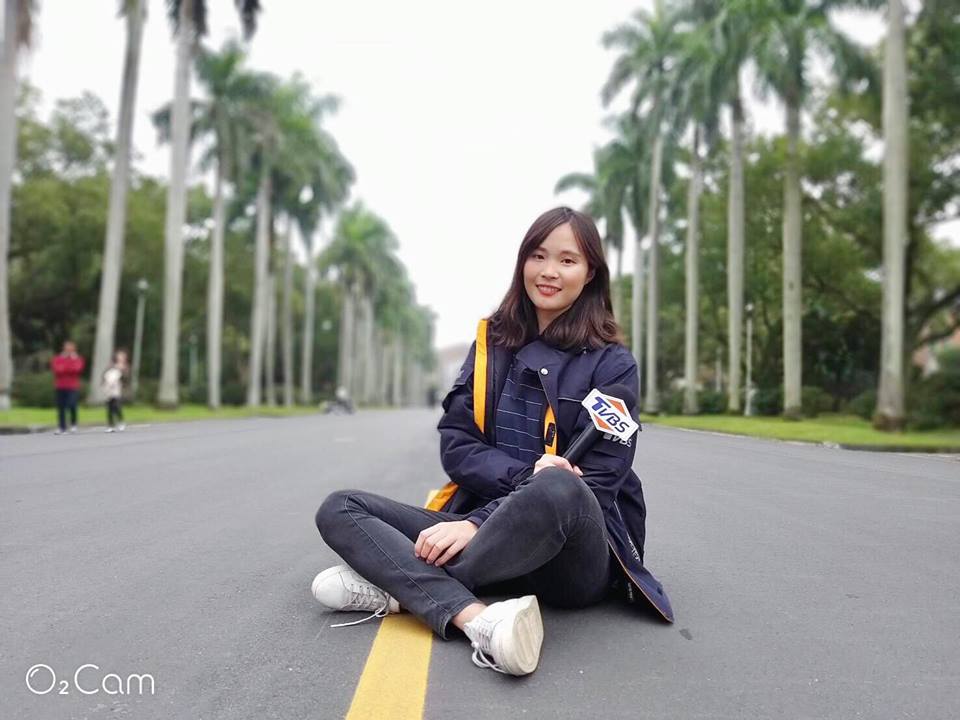
My journalism experience is somewhat unique. In online news, I happened to cross over into content creation and editing; at television, besides working as a on-camera news reporter, I also served as a columnist in the online new media department—an experience relatively uncommon among young journalists. While my reporting background in Taiwan's news media isn't as extensive as seniors with over a decade of experience, I've had many opportunities to shift between different ways of thinking.
In online news, I happened to cross over into content creation and editing; at television, besides working as an on-camera news reporter, I also served as a columnist in the online new media department—an experience relatively uncommon among young journalists. While my reporting background in Taiwan's news media isn't as extensive as seniors with over a decade of experience, I've had many opportunities to shift between different ways of thinking.
For me, the values that journalism has brought me are #courage, #boldness, and #achievement.
#Courage is when I faced Taiwan's richest person running for president while working at a niche media outlet, without company direction to guide me, purely documenting what happened on the ground. I had the opportunity to craft sensitive questions rather than follow the angle the company provided—because at my previous media outlet, I might never have gotten to ask that question.
#Boldness is when I'm holding a television station's microphone, knowing I need to ask the first question or that I'm positioned in the middle of the crowd. I can't be afraid to speak and must be decisive. Or when I'm kneeling next to Lin Shuhao, I can't reveal that I completely don't understand sports. Or attending Wang Po-jung's press conference with the Hokkaido Nippon-Ham Fighters, I still have to raise my hand to ask a question representing the TV station and NHK—but behind that is me shaking in body and spirit, and the pre-interview homework where I review Lin Shuhao's entire life story and memorize Wang Po-jung's accomplishments as coursework. Yes, we have only half an hour to an hour before interviews to do our homework, and if we're lucky, we can prepare the day before.
#Achievement is knowing that every single day I'm making progress, even though 80% is spent on meeting various requirements and coordinating with different units. It's also hearing perspectives from interviewees that I didn't know, being able to visit as a journalist places that few other professions have the chance to access as regular employees, and seeing reports published and influencing events.
Although journalists are vilified online, I myself have been attacked and called "brainless" for getting a birth rate unit wrong, and I've also been called a "prostitute" for pushing sensationalist posts as a social media editor. This incident affected me deeply, and to this day I haven't chosen to forgive those self-righteous trolls.
I decided to pursue journalism in my second year of university and even studied for a graduate degree for it. It's just that the news industry ten years ago and now are vastly different.
Taiwan's media environment hasn't provided a physically and mentally balanced, healthy workplace (such as a certain red media outlet that removed six decades of June 4th news from its archives). Watching my colleagues and good friends rushing to strike sites at 4 or 5 a.m. these days, quietly taking photos with strike banners, yet still holding their ground—I really think the media industry is one that needs to strike, but actually making it happen has so many constraints.
Although the news environment is difficult, there are still many excellent seniors and friends working hard in this industry. We just try to do our jobs well, yet we spend a much larger portion of our time telling others how hard we're working. This must be the profession in the world where suffering is most unspeakable.