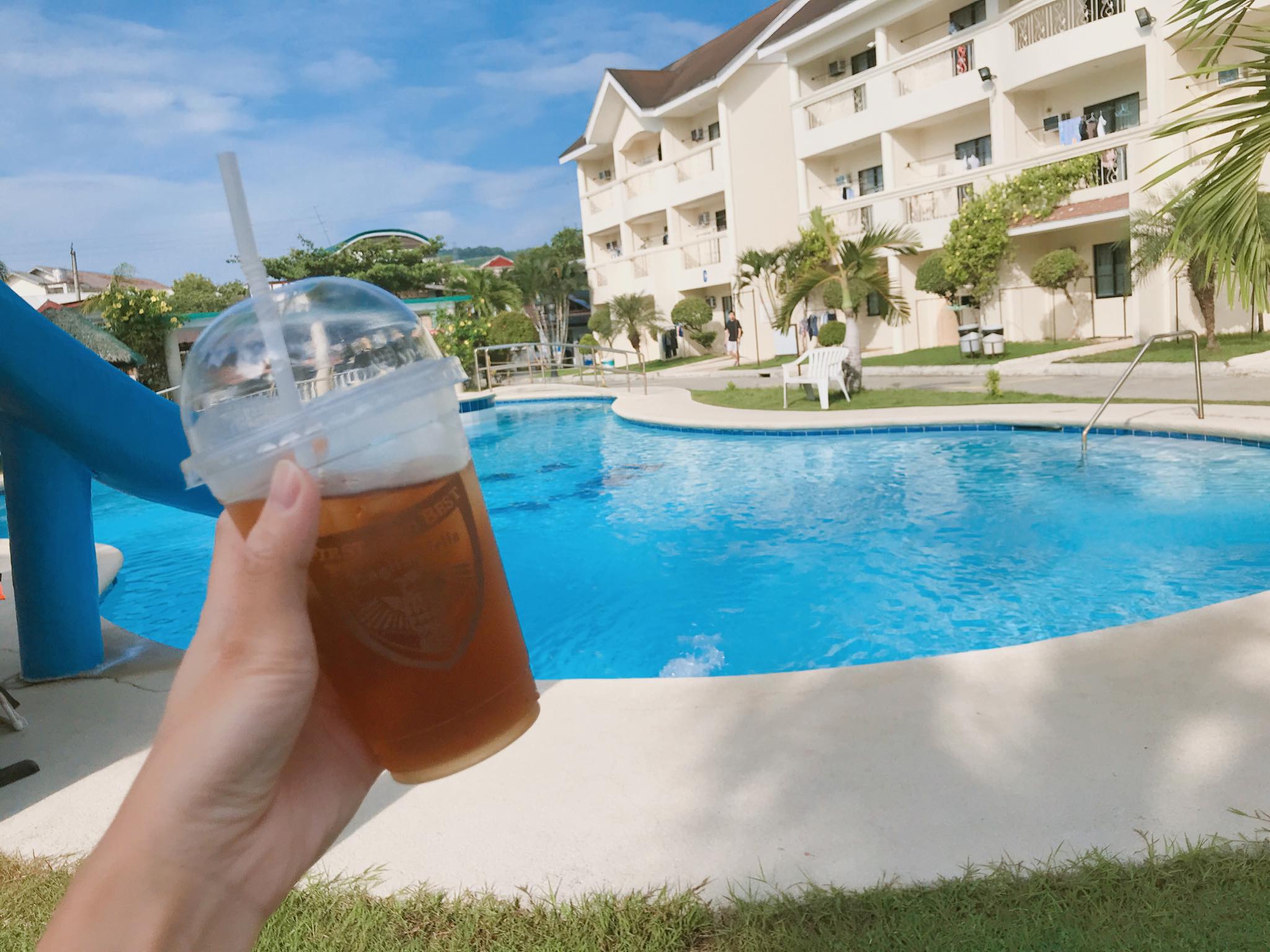
I departed for Cebu, Philippines on September 1st this year to study English, and I've just completed my fourth week. I took a level advancement exam, and my overall English ability improved by 7%. My reading score improved from 37 to 70 points (out of 100).
Given the interest from my previous post about whether studying at a Philippine language school is truly effective, I'd like to share my perspective: I think the Philippines is better suited for students with weaker English foundations, especially people like me with limited speaking ability. If you're already confident speaking, I'd recommend a native English-speaking country instead. In this post, I want to share my observations and experiences in detail, covering everything from the agency selection to actual classes.
1. What is a Sparta-style Language School in the Philippines?
I think people might not fully understand "Sparta," and some might even think it's the name of a school. However, "Sparta" is actually a "system"—almost all language schools in the Philippines have this strict system. Here's what a typical Sparta daily schedule looks like:
7:00 Wake up (varies per person)
7:30 Breakfast
8:00-12:00 Four classes (1-on-1 or group)
12:00-13:00 Lunch
13:00-17:00 Four classes (1-on-1 or group)
17:00-18:00 Dinner
17:00-22:00 Evening self-study + vocabulary test

(Photo / This is roughly what I look like when studying—total homebody vibes)
If you choose semi-Sparta, self-study is required on Mondays, Tuesdays, Thursdays, and Fridays. On days without mandatory self-study, you still need to return to school by 10 PM. On weekends, curfew is extended to 2 AM. Violations result in fines, though these can be offset by doing "school service."
This lifestyle is even more intense than a typical high school senior's. Back in Taiwan I could survive on 4-5 hours of sleep, but here I'm so exhausted I can't even pull all-nighters or do anything else. I couldn't even finish watching one Korean drama in a month!
2. Regarding All-English Language Classes

(Photo / My speaking teacher—a very goal-oriented person who helps me reassess my life every morning discussion)
I'd like to discuss my own English ability here. Although I graduated from a national university graduate program in Taiwan, the Taiwanese education system from elementary school through university basically teaches English through reading and writing if you just follow the curriculum without realizing English's importance and actively practicing it.
I haven't had major issues with reading and writing—I even had to translate English academic papers weekly during graduate school. However, my first exposure to English listening was a high school midterm exam. Before that, my kindergarten, elementary school, and junior high had no English listening training whatsoever, so that exam was quite shocking. Of course, English teaching has changed since then.
To summarize my English problems: I never committed to seriously learning English, and throughout my education, teachers, classes, and schools may have allocated listening practice time to other subjects. Beyond these environmental factors, I lived in Korea for six months. Even though I've been back in Taiwan for over four years, before coming to the Philippines I still had the habit of instinctively wanting to speak Korean when meeting foreigners—despite my Korean only being conversational level. When I see foreigners, I can't help wanting to speak Korean.
Over time, I realized I couldn't face English native speakers. Seeing English would make me lose confidence and want to avoid it, preventing me from having fluent conversations with foreigners, which in turn affected my career confidence. After much thought, this is why I quit my job to come to the Philippines.
Now, back to the main topic.
Regarding the language school's English classes, I'm taking "ESL4" for one month plus "EBC Business English" for two months. I chose this combination because after high school graduation, I basically stopped seriously studying English. Although my high school English was decent, that was ten years ago. I chose ESL4 to rekindle my English memory, then move into business English for workplace use.
As shown in the schedule above, each day has three group classes, four 1-on-1 classes, and one elective class. If you have the energy, you can take all eight classes daily. Starting in week three, I added a public speaking elective because I'm genuinely interested in presentations, so I don't feel burdened by the workload.
[Level Distribution]
My school is English Fella, which I chose based on my agency's recommendation. I told the agency I wanted to study business English, and Fella offered the best value for money considering price and environment. On the first day, there's a level placement test. I didn't prepare at all, and my scores were:
Listening 67/Reading 37/Grammar 55/Speaking 28
My speaking was absolutely terrible—I only said three sentences during my self-introduction (haha). I have no idea what happened with the reading section. Anyway, I was placed in Level 3 classes (out of 9 levels).
The school basically groups people of similar levels in the same classes and assigns textbooks according to individual levels, creating a customized schedule.
[Classroom Experience]

(Photo / 1-on-1 classes are literally just you and the teacher—here's my grammar teacher)
Once classes started, teachers have you do a simple self-introduction and chat since it's the first meeting. Since my speaking level isn't great, I struggle to complete full sentences, but I try hard to express myself with gestures. Teachers are very patient waiting for you.
Some teachers immediately correct your verb tenses, which I really appreciate. Teachers don't correct harshly—they have you repeat after them. More attentive teachers constantly have you practice pronunciation because studying English in Taiwan gives you a "Taiwan accent." I'm better off than some, but having studied Korean and minored in French at university, I have incorrect pronunciation on certain words. Teachers don't hesitate to spend time having me repeat, exaggerating their mouth shapes for me to imitate.
However, I really must suggest: if you want to go to the Philippines but have such basic English that you don't understand S+V present tense structures or struggle with the alphabet, absolutely don't study English abroad fantasizing that you'll magically improve just from being in an English environment. Though I went to Korea without any Korean ability, Korean vowels and consonants have fewer variations, and grammar and tenses are relatively simple. Korean teachers are used to people with zero Korean background and know how to teach them. But English teachers here basically assume students have reached a certain level, so they can't teach very basic material. I've observed that some older classmates with no foundation really struggle.
[Switching Classes] Feel the level is too low? Switch anytime
Around week two, I was in a grammar group class that I found too easy. Plus, it was an 8-person class with wide ability gaps. I got bored and even scrolled on my phone during class. Not wanting to waste money, I applied online to switch that easy grammar class to a native English course with an American teacher. I felt much better about it. Of course, there were still scheduling coordination issues with the switch.

(Photo / My American teacher—he literally speaks like a recording. His signature gesture is the peace sign meaning "Enjoy your life")
3. Choosing a Good Agency is Like Having Parents Abroad
Everyone attending Philippine language schools must go through an agency because Philippine schools have contracts with Taiwanese agencies offering cheaper prices than direct enrollment. For example, my Japanese classmate wanted to add one week locally at about 23,000 Philippine pesos (roughly 13,800 TWD), but my agency quoted around 10,000 TWD per week on average. So going through an agency is definitely more cost-effective.
But why do we say a good agency is like having parents abroad? Let me break this down by enrollment, pre-departure, and post-arrival stages.
[Enrollment]
I enrolled through Weige Study Abroad. Since I was too lazy to research thoroughly, I just messaged my agency contact with any questions, and he'd reply within about an hour. My situation was unusual—I changed my departure date twice. I originally planned to leave in September this year, but work made me postpone to April next year. Around May, I decided to quit and leave earlier, so I changed back to September (yes, I'm that indecisive).
Changing plans and enrollment require the agency to contact the school since housing and classes need arrangement. For someone as indecisive as me, I definitely added burden to the agency, but the staff quickly handled everything. Even my Philippine visa was completed in just three days with only my passport and some documents.
[Pre-departure]
Weige holds orientation sessions in batches before departure. I expected a typical large-scale orientation, but it turned out each person had their own dedicated folder and seat. The orientation staff carefully explained everything—from airport pickup, living environment, dietary considerations, phone card top-ups, etc. Since agency staff actually visit schools or do trial classes, they even filmed videos of the pickup process. So when I first arrived in Cebu, I didn't need any effort finding the exit or school staff. Right at the airport exit, I could see the school manager (so reassuring).
If students from the same batch are going to the same school, the agency helps them connect so classmates can meet in Taiwan beforehand. Though I traveled alone, I happened to share a flight with a couple, so we met at Taoyuan Airport and often moved together after arriving at school. I really felt lucky not being alone, and was always well-cared-for when going out. This arrangement was genuinely thoughtful. Also, since students depart continuously (about 100 per week), the agency has 24-hour rotating staff in the group chat. If anyone has scheduling issues or problems anytime, there's always someone available.
[Post-arrival]
As mentioned, I had some class-switching concerns and was initially unsatisfied with the results. Since I paid good money to come to the Philippines, I wanted classes that truly helped me. After my first switch, I privately messaged my agency contact asking him to communicate directly with the school on my behalf. My course was eventually switched to something more satisfying. Even during level tests, the agency stayed very concerned. Being abroad is so warm~~
4. Overall Reflections

(Photo / Openly sharing grades—school uploads them automatically. Pretty good)
First, let me mention monthly level exams. The advancement test is genuinely very difficult. If the entrance exam is kindergarten level, the advancement exam rivals university level, so some people actually decline.
Advancement exam scores (09/25)
Listening 50 / Reading 70 / Grammar 55 / Speaking 37
Entrance exam (09/02)
Listening 67 / Reading 37 / Grammar 55 / Speaking 28
7% improvement in 23 days. Overall progress seems modest at face value, and speaking exams have some teacher-standard variation. But personally, going from only saying three sentences in self-introduction to speaking for two minutes is huge progress. Though daily studying is truly exhausting (crying), studying abroad builds my confidence.
As for actual English ability, I should share this too: despite intense all-day studying, I'm someone who needs time to absorb material. I also constantly think about what needs improvement, so you can't just listen to teacher lectures and expect automatic progress. You must actively review grammar, identify what you don't understand, and recall lesson content needing reinforcement. Personally, I search YouTube for TED Talks, write along while listening (catching mistakes in hearing), and practice listening. For grammar, I supplement with Adonis English or Chinese versions to confirm my Philippine teacher's explanations and absorb through multiple channels. Absolutely don't just collapse in your room afterward—do that and you'll fall behind classmates over time.

Another insight I deeply felt: "Learning English through English is truly important." Only this way can you understand English usage context and meaning rather than mechanically memorizing vocabulary and sentence patterns without knowing how to apply them. This is why most Taiwanese people have limited speaking and listening ability.
Past education made us too afraid of making mistakes. The textbooks here have no single correct answer—there are three or four possible answers. When you're wrong, teachers don't say you're incorrect but rather "that's a great idea, let's think about it from another angle" or "are there other possibilities you think might work?" This open-minded thinking really suits me.
Has my English actually improved? Of course, but I'm still restructuring my brain's framework. I wouldn't say I've become amazing, but at least when I run out of words, I can generate alternative explanations for my thoughts. Of course, English requires continuous practice to keep improving.
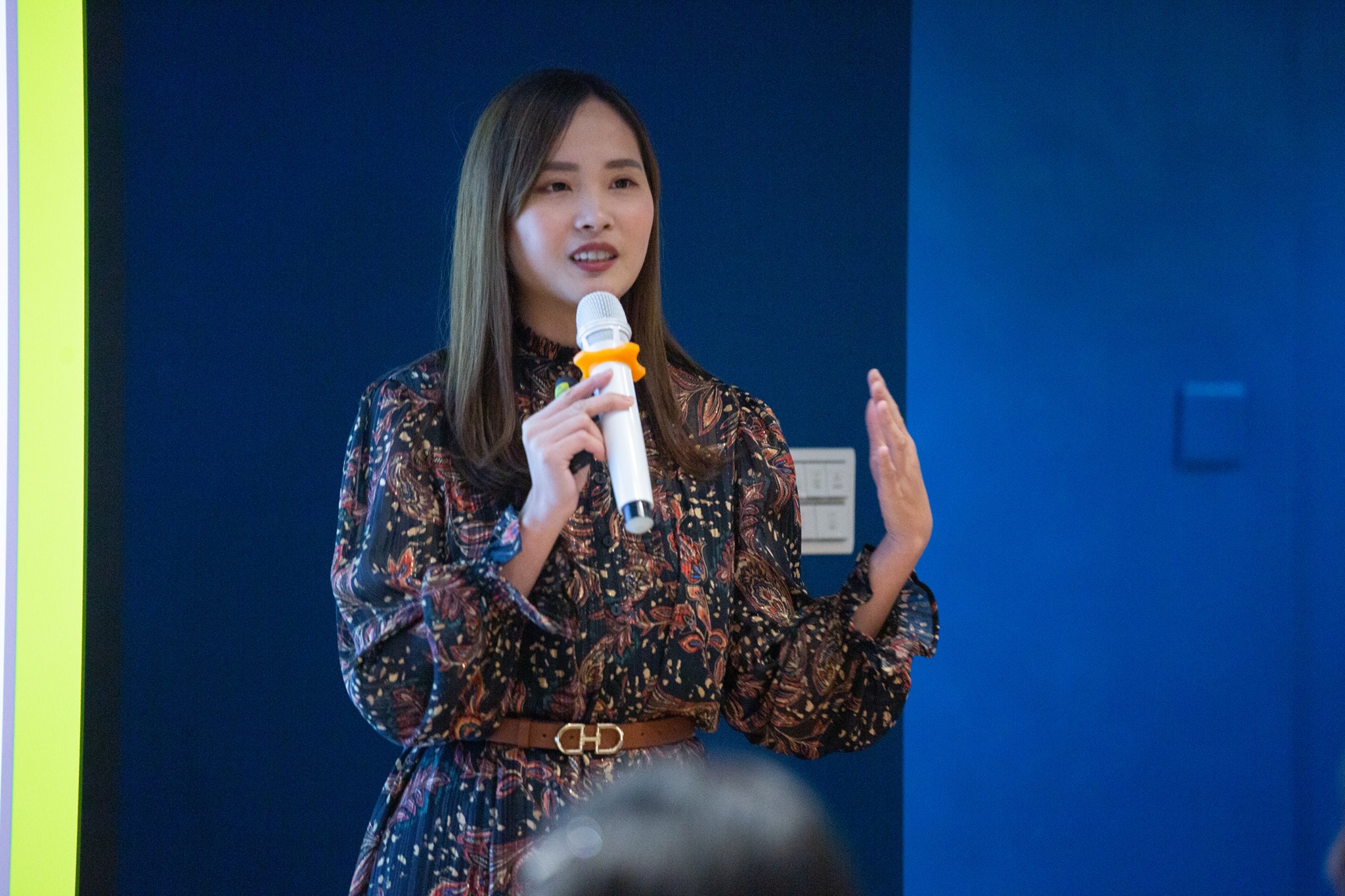
As this speaker says, English is just a communication tool—the real point is solving problems.
Just focus on your audience not yourself then you will conquer the fear.
【TED Talks】Want to learn a language? Speak it like you're playing a video game