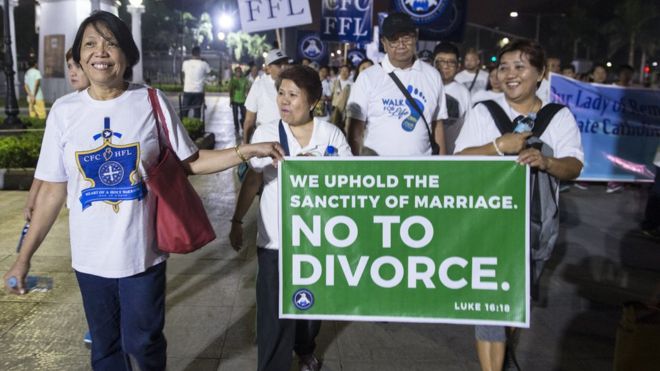
The Philippines is one of only two countries in the world that prohibits divorce. Locals describe it as: "Divorce is a shackle for the poor, a privilege for the rich."
"Our people, as long as they love each other, will want to have a child together," said Eamma, my 24-year-old Filipino male teacher. It was the first day of formal classes, and because of my journalism background, the teachers' discussions with me went beyond textbook content—we had in-depth conversations about local culture and economics in one-on-one sessions.
This topic came up because I mentioned that Taiwan has high prices but wages that aren't sufficient to support marriage and raising children. "We can't even take care of ourselves, let alone raise children," Eamma responded immediately. He said the Philippines faces the same high prices and low wages, but their people don't know how to avoid having children. When they love each other, they want to have a child, so a family might end up with 6 to 7 children.
But there's another problem: "Philippine men only want to have children, not get married, because they don't want to take responsibility," Eamma said. His 19-year-old sister got married at 17 and already has a child who is over 2 years old. Her husband is 26, but they didn't legally marry—they didn't even have a wedding ceremony.
Because in the Philippines, simply holding a wedding ceremony counts as being legally married; unlike Taiwan where even after a wedding, you must register to be considered legally married.
Because men don't want to take responsibility, Philippine women not only marry early, are unable to attend college, and don't get proper weddings, but also because they marry when they understand nothing, they don't understand the nature of marriage, and by the time they want a divorce, it's already too late.
Because "divorce is illegal," women have to go through extremely complicated lawsuits that could take 3 to 5 years, or possibly even 10 years. Interestingly, the divorce topic came up in discussion with another female teacher, Ai.
Ai said that getting divorced in the Philippines is not as simple as in Taiwan—just sign and pay. If you want to divorce locally, you still have to pay, but the fees are extremely high. According to online resources I researched, someone once had to pay nearly $20,000 USD in lawyer fees for a divorce lawsuit, which is approximately three years of average annual household income for an ordinary local family! But since local people have poor economic conditions, there's a saying in the Philippines that describes divorce: "Divorce is a shackle for the poor, a privilege for the rich."
There are also conditions to meet in order to divorce. Only if you meet the following conditions can you obtain a "petition" and then start hiring a lawyer.
- Lack of parental consent (if either party is at least 18 but below 21 years old)
- Psychological incapacity
- Fraud
- Consent for marriage obtained by force, intimidation, or undue influence
- Impotence / physical incapability of consummating the marriage
- Serious sexually transmitted disease
"So does Philippine school teach knowledge related to marriage?" I thought this might be like Taiwan's health education, so I asked. However, Ai said, "Philippine women get married very early. If schools taught this knowledge, they would actually be afraid to enter marriage." This perspective felt reminiscent of the debate over Taiwan's sex education.
In fact, Filipinos are conducting a social movement to "legalize divorce." As early as 2015, 60% of Filipinos supported legalizing divorce. But the inability to divorce actually stems from Catholic faith, which is why only Vatican City and the Philippines have restrictions against divorce.
In March 2018, divorce legalization polling showed 53% support. Although the House of Representatives passed the bill, when it was sent to the Senate, it faced harsh scrutiny. Several senators allied with President Duterte publicly opposed divorce legalization, and there have been no new developments since.
On the third day of arriving in the Philippines, through English conversation classes, I learned about the "Real Life" of Philippines culture. This culture really surprised me and helped me initially understand the plight of low status for Philippine women.